Precision Mechanical Polishing Services Chicago
Rotary wheel, belt, buffing, lapping, and CMP operations for general surface refinement and semiconductor / optical substrates.
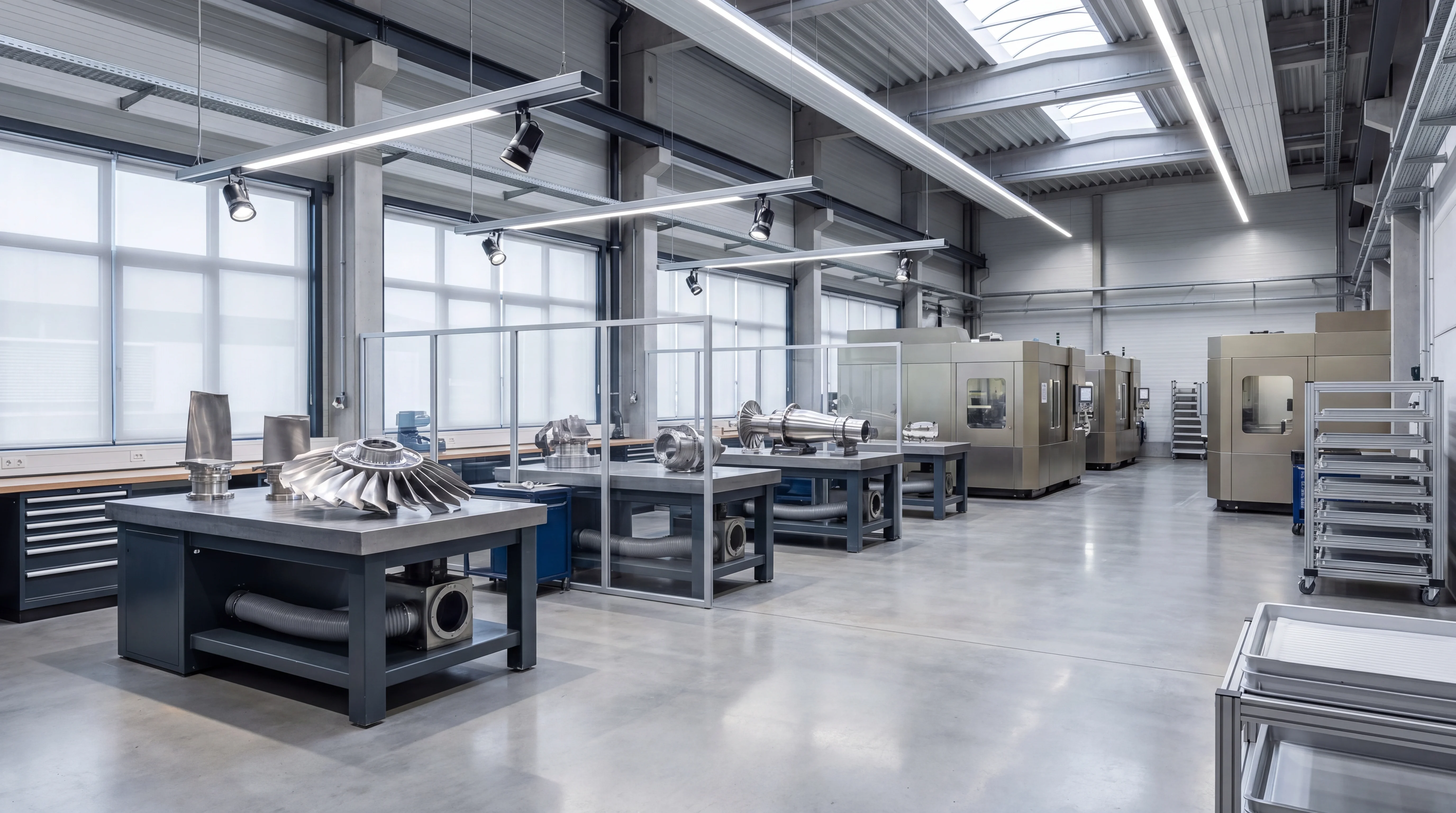
Mechanical Polishing: Methods Covered
Each method below has its own acceptance criteria and finishing equipment. The intake directs the part to the finishing facility with the appropriate method and accreditation.
Chemical-Mechanical Polishing (CMP)
Chemical-mechanical polishing (CMP) is executed by introducing a precisely formulated, abrasive-laden chemical slurry between a compliant polishing pad and the targeted workpiece. This advanced hybrid methodology simultaneously leverages chemical surface oxidation to soften the substrate material and mechanical abrasion to remove it. Such synergistic action enables extreme planarization and sub-nanometer surface finishes that cannot be achieved through conventional mechanical polishing alone. The process parameters - including downforce, platen speed, and slurry chemistry - are rigorously controlled to mitigate subsurface damage, a critical requirement for silicon wafers, precision optics, and extreme sealing surfaces. By systematically balancing chemical reactivity with mechanical friction, surface finishes are routinely driven into the single-digit angstrom range.
When absolute precision and defect-free mirror finishes are mandated by engineering specifications, CMP is deployed to meet stringent tolerances. Typical process outcomes and control metrics include:
- Reduction of surface roughness (Ra) and root-mean-square (RMS) variations to sub-nanometer thresholds, verified by high-resolution interferometry.
- Correction of localized topographical irregularities to achieve global planarization and strict optical flatness.
- Elimination of scratch-dig defects in strict alignment with ISO 10110 surface imperfection standards.
- Preservation of tight parallelism and thickness uniformity across large-diameter technical substrates.
- Complete removal of residual mechanical stress layers induced by preceding lapping or grinding operations.
Additional Techniques and Variants
Specialized variants and adjacent techniques available on engineering review. Click an entry for a short description.
Rotary Polishing (Wheel/Belt Machines)
Rotary Polishing (Wheel/Belt Machines) is supported as a variant of mechanical polishing work for Chicago-area parts. Acceptance criteria, abrasive grade, and process control points are confirmed against the customer specification at intake.
Belt Polishing / Abrasive Belt Grinding
Belt Polishing / Abrasive Belt Grinding is supported as a variant of mechanical polishing work for Chicago-area parts. Acceptance criteria, abrasive grade, and process control points are confirmed against the customer specification at intake.
Buffing (Cloth/Soft Wheel With Polishing Compound)
Buffing (Cloth/Soft Wheel With Polishing Compound) is supported as a variant of mechanical polishing work for Chicago-area parts. Acceptance criteria, abrasive grade, and process control points are confirmed against the customer specification at intake.
Mechanical Lapping
Mechanical Lapping is supported as a variant of mechanical polishing work for Chicago-area parts. Acceptance criteria, abrasive grade, and process control points are confirmed against the customer specification at intake.
Sandpaper / Abrasive Disc Polishing
Sandpaper / Abrasive Disc Polishing is supported as a variant of mechanical polishing work for Chicago-area parts. Acceptance criteria, abrasive grade, and process control points are confirmed against the customer specification at intake.
How a Chicago Mechanical Polishing Job Runs
Intake
Material, geometry, target Ra or finish standard, quantity, and ship-back address captured in the form above.
Engineering Review
Method, abrasive grade, and acceptance criteria are confirmed against the spec by the finishing facility before parts ship.
Controlled Processing
Mechanical Polishing is performed at an accredited shop with in-process profilometer checks to prevent over-polishing.
QA and Return
Final Ra, flatness, and (where specified) passivation are logged. Parts are cleaned and returned to Chicago on a logged carrier.
In-Depth Reference for Chicago
Local Industrial Demand for Mechanical Polishing in Chicago
Mechanical polishing demand in the Chicago metropolitan area is structurally tied to the region's dense concentration of food processing, pharmaceutical manufacturing, and heavy industrial facilities. The vast industrial corridors intersecting Cook and DuPage counties, particularly the manufacturing hubs within Elk Grove Village and along the I-55 Stevenson Expressway, represent an immense concentration of sanitary and industrial fluid-handling infrastructure. Regional supply chains require stringent surface modification protocols to support processing equipment, high-cycle industrial machinery, and intricate piping networks. Facilities operating within the Illinois Medical District, alongside the sprawling biopharmaceutical campuses located in the northern suburbs such as Deerfield and North Chicago, mandate highly controlled mechanical polishing processes. These finishing procedures are essential to maintain sterile boundaries, facilitate efficient material flow, and prevent bio-burden accumulation in sensitive production environments. The presence of global food and beverage manufacturing headquarters within the city limits further dictates a continuous, high-volume need for sanitary surface finishes on stainless steel mixing tanks, fermentation vessels, and automated fluid transfer systems.
Operational pressures in these Chicago-area environments are compounded by the economic necessity to maximize production throughput while minimizing downtime during mandated clean-in-place (CIP) and sterilize-in-place (SIP) operations. Equipment utilized in these sectors requires surface topographies that actively resist bacterial adhesion, product hold-up, and localized chemical corrosion. Precision mechanical polishing is also heavily utilized by local aerospace and heavy equipment component manufacturers situated near O'Hare International Airport. In these heavy industrial applications, the removal of surface defects, micro-fissures, and machining marks is critical for reducing friction, enhancing fatigue resistance, and preparing metallic substrates for subsequent chemical passivation. Key demand drivers in the Chicago manufacturing sector include:
- Sanitary Equipment Fabrication: Preparation of vessels and piping for compliance with food-grade and pharmaceutical production standards.
- Industrial Wear Reduction: Refinement of mating surfaces on heavy machinery manufactured throughout the South Side and near-west industrial parks.
- Substrate Preparation: Removal of thermal degradation and scaling resulting from local heavy welding and casting operations prior to final coating application.
Technical Standards and Compliance Frameworks
Execution of mechanical polishing protocols within the Chicago regulatory landscape requires strict adherence to documented surface texture standards and exacting sanitary design specifications. Compliance with ASME BPE (Bioprocessing Equipment) standards is a baseline requirement for fluid handling components destined for local pharmaceutical and food-grade applications, specifically concerning acceptable roughness average (Ra) values. Mechanical finishing operations are frequently tasked with achieving Ra values of 15 to 20 microinches (0.38 to 0.51 micrometers) or lower for direct product contact surfaces. The verification of these finishes is achieved through calibrated profilometer measurements, which evaluate the micro-geometry of the polished substrate. Surface texture measurement and profiling methodologies are strictly governed by ASME B46.1 and ISO 4287, which dictate the technical evaluation parameters for roughness, waviness, and lay. For biopharmaceutical manufacturers adhering to FDA 21 CFR Part 211 regulations regarding equipment construction and maintenance, all mechanically polished surfaces must demonstrate absolute uniformity to prevent cross-contamination and to reliably support validated sterilization cycles.
Acceptance criteria for mechanical polishing projects frequently mandate complex, multi-step abrasive sequencing. This methodology involves controlled transitions from initial coarse stock removal using aggressive abrasives to ultrafine buffing and lapping techniques utilizing specialized compounds. These physical modifications alter the microscopic peaks and valleys of the metal, requiring rigorous visual, tactile, and instrumental inspections prior to component release. Traceability requirements in these highly scrutinized Midwest manufacturing sectors necessitate detailed material certifications, abrasive media documentation, and comprehensive profilometry reporting. These documentation packages establish a quantifiable, permanent record of the finished topography, ensuring that the processed components satisfy internal quality assurance audits, regional safety mandates, and external regulatory inspections. The deployment of NIST-traceable calibration standards for all measurement instruments ensures that polished components integrated into Chicago's industrial infrastructure meet the exact geometric and topographical tolerances required for their specific operational duties.