Precision Mechanical Polishing Services Des Moines
Rotary wheel, belt, buffing, lapping, and CMP operations for general surface refinement and semiconductor / optical substrates.
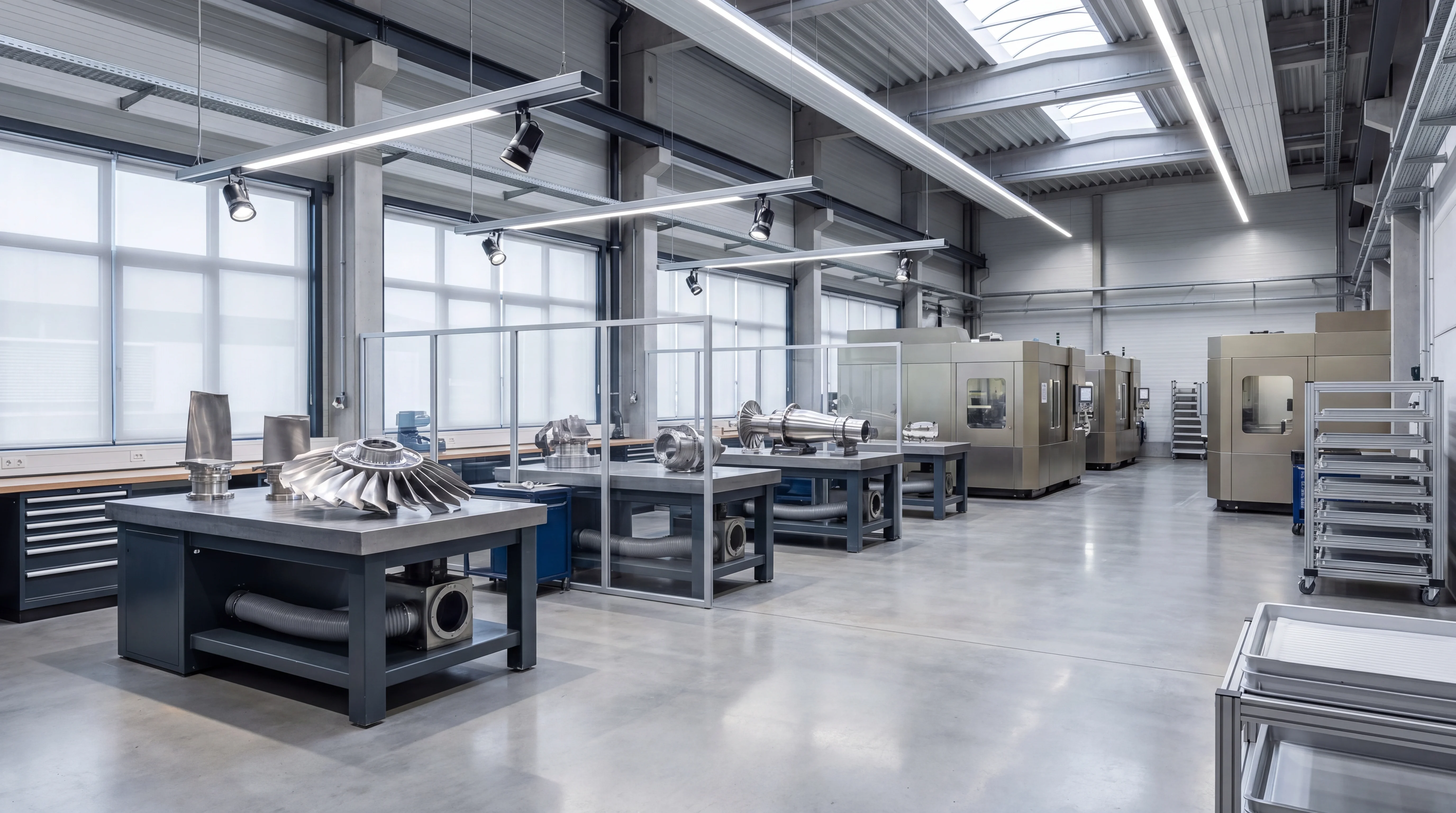
Mechanical Polishing: Methods Covered
Each method below has its own acceptance criteria and finishing equipment. The intake directs the part to the finishing facility with the appropriate method and accreditation.
Chemical-Mechanical Polishing (CMP)
Chemical-mechanical polishing (CMP) is executed by introducing a precisely formulated, abrasive-laden chemical slurry between a compliant polishing pad and the targeted workpiece. This advanced hybrid methodology simultaneously leverages chemical surface oxidation to soften the substrate material and mechanical abrasion to remove it. Such synergistic action enables extreme planarization and sub-nanometer surface finishes that cannot be achieved through conventional mechanical polishing alone. The process parameters - including downforce, platen speed, and slurry chemistry - are rigorously controlled to mitigate subsurface damage, a critical requirement for silicon wafers, precision optics, and extreme sealing surfaces. By systematically balancing chemical reactivity with mechanical friction, surface finishes are routinely driven into the single-digit angstrom range.
When absolute precision and defect-free mirror finishes are mandated by engineering specifications, CMP is deployed to meet stringent tolerances. Typical process outcomes and control metrics include:
- Reduction of surface roughness (Ra) and root-mean-square (RMS) variations to sub-nanometer thresholds, verified by high-resolution interferometry.
- Correction of localized topographical irregularities to achieve global planarization and strict optical flatness.
- Elimination of scratch-dig defects in strict alignment with ISO 10110 surface imperfection standards.
- Preservation of tight parallelism and thickness uniformity across large-diameter technical substrates.
- Complete removal of residual mechanical stress layers induced by preceding lapping or grinding operations.
Additional Techniques and Variants
Specialized variants and adjacent techniques available on engineering review. Click an entry for a short description.
Rotary Polishing (Wheel/Belt Machines)
Rotary Polishing (Wheel/Belt Machines) is supported as a variant of mechanical polishing work for Des Moines-area parts. Acceptance criteria, abrasive grade, and process control points are confirmed against the customer specification at intake.
Belt Polishing / Abrasive Belt Grinding
Belt Polishing / Abrasive Belt Grinding is supported as a variant of mechanical polishing work for Des Moines-area parts. Acceptance criteria, abrasive grade, and process control points are confirmed against the customer specification at intake.
Buffing (Cloth/Soft Wheel With Polishing Compound)
Buffing (Cloth/Soft Wheel With Polishing Compound) is supported as a variant of mechanical polishing work for Des Moines-area parts. Acceptance criteria, abrasive grade, and process control points are confirmed against the customer specification at intake.
Mechanical Lapping
Mechanical Lapping is supported as a variant of mechanical polishing work for Des Moines-area parts. Acceptance criteria, abrasive grade, and process control points are confirmed against the customer specification at intake.
Sandpaper / Abrasive Disc Polishing
Sandpaper / Abrasive Disc Polishing is supported as a variant of mechanical polishing work for Des Moines-area parts. Acceptance criteria, abrasive grade, and process control points are confirmed against the customer specification at intake.
How a Des Moines Mechanical Polishing Job Runs
Intake
Material, geometry, target Ra or finish standard, quantity, and ship-back address captured in the form above.
Engineering Review
Method, abrasive grade, and acceptance criteria are confirmed against the spec by the finishing facility before parts ship.
Controlled Processing
Mechanical Polishing is performed at an accredited shop with in-process profilometer checks to prevent over-polishing.
QA and Return
Final Ra, flatness, and (where specified) passivation are logged. Parts are cleaned and returned to Des Moines on a logged carrier.
In-Depth Reference for Des Moines
Industrial Demand Drivers for Mechanical Polishing Across Des Moines
The manufacturing infrastructure throughout the Des Moines metropolitan area creates continuous demand for controlled mechanical polishing applications. Focused heavily along the Interstate 35 and Interstate 80 corridors, including heavy industrial concentrations in Ankeny, Altoona, and Johnston, regional production centers require precise surface modification for both heavy machinery and bioscience equipment. Agricultural equipment manufacturing, a foundational economic driver in Polk County, utilizes mechanical polishing to prepare raw fabricated components for extreme field conditions. Hydraulic cylinders, actuator rods, and heavy-duty drivetrain elements produced in local industrial parks rely on specific abrasive processing to achieve low-friction surface profiles. These finishes are required to maintain hydraulic seal integrity, reduce mechanical wear, and mitigate the initial onset of environmental corrosion caused by prolonged exposure to soil, moisture, and agricultural chemicals. The friction dynamics of sliding mechanisms dictate that metal substrates undergo rigorous grit-sequenced abrasion to eliminate microscopic peaks and valleys that could prematurely shear polymeric seals or retain abrasive silica dust from field operations.
Beyond heavy implements, the broader Des Moines area hosts a dense concentration of agribusiness, nutritional science, and food processing facilities. Nutritional science hubs, such as those established near the Des Moines River and the eastern industrial zones, demand exact surface refinement for stainless steel processing infrastructure. Tanks, hoppers, blending vessels, and pneumatic conveying systems require mechanical polishing to eliminate surface anomalies generated during primary fabrication, such as weld spatter, heat tint, and macro-porosity. Localized metal finishing within the central Iowa supply chain reduces component transit times and allows manufacturers to strictly oversee the abrasive sequencing required to meet stringent sanitary equipment mandates. Operational pressures in these sectors prioritize equipment cleanability and the reduction of biological fouling, necessitating precise control over the material removal processes employed during final surface finishing. The presence of microscopic crevices on fluid-contact surfaces directly correlates to extended downtime for chemical sanitation, making the exact execution of mechanical polishing parameters a critical operational requirement for regional plant managers striving to maximize production uptime.
Compliance Frameworks and Surface Profilometry Standards
Mechanical polishing protocols are dictated by rigorous metrological standards and regulatory frameworks specific to the component's operational environment. Within the central Iowa food processing and nutritional bioscience sectors, surface finishing must satisfy the rigorous criteria established by 3-A Sanitary Standards and FDA 21 CFR Part 117. Process equipment, predominantly fabricated from 304 and 316L stainless steel alloys, requires multi-stage abrasive sequencing to achieve specific Ra (Roughness Average) parameters. For standard sanitary applications, internal contact surfaces are mechanically polished to achieve a maximum of 32 Ra micro-inches, ensuring that cleaning fluids can effectively sanitize the equipment during automated Clean-In-Place (CIP) and Sterilize-In-Place (SIP) cycles. Applications falling under ASME BPE (Bioprocessing Equipment) standards require even finer finishes, often demanding 20 Ra or 15 Ra, alongside strict visual inspection criteria that prohibit surface defects such as pits, gouges, folds, and erratic directional grain patterns that could serve as bacterial harborages. Advanced surface metrology is employed to quantify these parameters, utilizing skidless profilometers to capture both roughness and waviness profiles across complex geometries, ensuring uniform abrasive contact even on contoured surfaces, tight radii, and internal bore diameters.
For the agricultural and heavy industrial sectors operating throughout the Des Moines manufacturing corridors, acceptance criteria focus heavily on dimensional stability and structural integrity following the abrasive process. Mechanical polishing must remove specified amounts of surface material to eliminate stress risers and micro-fractures without inducing thermal distortion or altering the underlying metallurgical properties of the substrate. Strict adherence to Geometric Dimensioning and Tolerancing (GD&T) standards is evaluated post-polishing to verify that the mechanical removal of material has not pushed the component out of functional dimensional compliance. Verification protocols typically require documentation of several critical parameters:
- NIST-traceable profilometer readings confirming final Ra or Rz values according to ASME B46.1 guidelines
- Visual inspection reports verifying the complete removal of scale, oxidation, and abrasive embedment
- Confirmation of directional grain alignment relative to component friction or fluid flow paths
The alignment of the polish grain is strictly controlled; linear or rotary finishes are specified based on the fluid dynamic or frictional requirements of the end application. This ensures that the final surface texture optimally supports the mechanical function of the assembly in its intended operational environment, maintaining the strict tolerance grades required by heavy manufacturing and bioscience sectors alike.