Precision Mechanical Polishing Services Grand Rapids
Rotary wheel, belt, buffing, lapping, and CMP operations for general surface refinement and semiconductor / optical substrates.
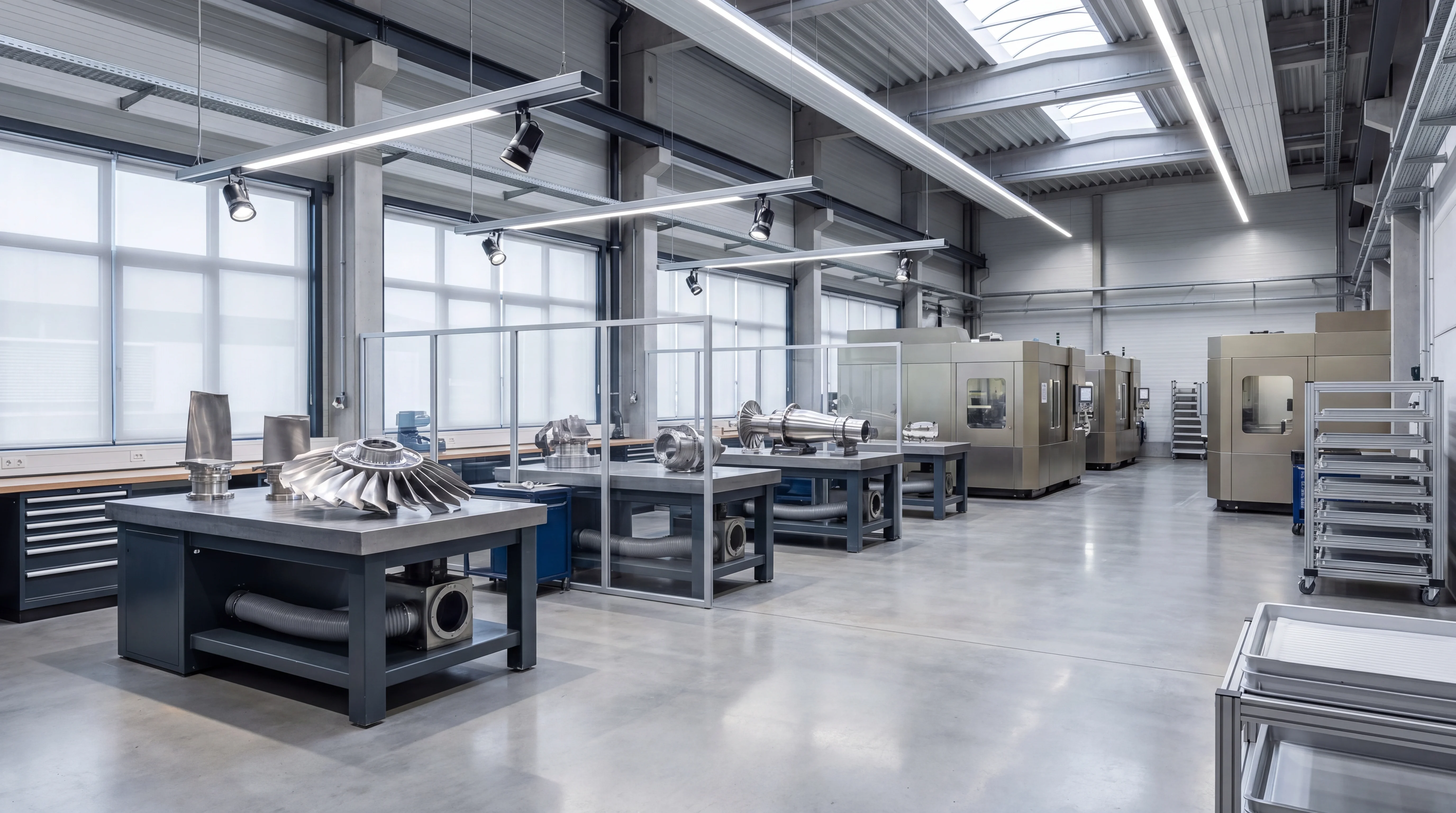
Mechanical Polishing: Methods Covered
Each method below has its own acceptance criteria and finishing equipment. The intake directs the part to the finishing facility with the appropriate method and accreditation.
Chemical-Mechanical Polishing (CMP)
Chemical-mechanical polishing (CMP) is executed by introducing a precisely formulated, abrasive-laden chemical slurry between a compliant polishing pad and the targeted workpiece. This advanced hybrid methodology simultaneously leverages chemical surface oxidation to soften the substrate material and mechanical abrasion to remove it. Such synergistic action enables extreme planarization and sub-nanometer surface finishes that cannot be achieved through conventional mechanical polishing alone. The process parameters - including downforce, platen speed, and slurry chemistry - are rigorously controlled to mitigate subsurface damage, a critical requirement for silicon wafers, precision optics, and extreme sealing surfaces. By systematically balancing chemical reactivity with mechanical friction, surface finishes are routinely driven into the single-digit angstrom range.
When absolute precision and defect-free mirror finishes are mandated by engineering specifications, CMP is deployed to meet stringent tolerances. Typical process outcomes and control metrics include:
- Reduction of surface roughness (Ra) and root-mean-square (RMS) variations to sub-nanometer thresholds, verified by high-resolution interferometry.
- Correction of localized topographical irregularities to achieve global planarization and strict optical flatness.
- Elimination of scratch-dig defects in strict alignment with ISO 10110 surface imperfection standards.
- Preservation of tight parallelism and thickness uniformity across large-diameter technical substrates.
- Complete removal of residual mechanical stress layers induced by preceding lapping or grinding operations.
Additional Techniques and Variants
Specialized variants and adjacent techniques available on engineering review. Click an entry for a short description.
Rotary Polishing (Wheel/Belt Machines)
Rotary Polishing (Wheel/Belt Machines) is supported as a variant of mechanical polishing work for Grand Rapids-area parts. Acceptance criteria, abrasive grade, and process control points are confirmed against the customer specification at intake.
Belt Polishing / Abrasive Belt Grinding
Belt Polishing / Abrasive Belt Grinding is supported as a variant of mechanical polishing work for Grand Rapids-area parts. Acceptance criteria, abrasive grade, and process control points are confirmed against the customer specification at intake.
Buffing (Cloth/Soft Wheel With Polishing Compound)
Buffing (Cloth/Soft Wheel With Polishing Compound) is supported as a variant of mechanical polishing work for Grand Rapids-area parts. Acceptance criteria, abrasive grade, and process control points are confirmed against the customer specification at intake.
Mechanical Lapping
Mechanical Lapping is supported as a variant of mechanical polishing work for Grand Rapids-area parts. Acceptance criteria, abrasive grade, and process control points are confirmed against the customer specification at intake.
Sandpaper / Abrasive Disc Polishing
Sandpaper / Abrasive Disc Polishing is supported as a variant of mechanical polishing work for Grand Rapids-area parts. Acceptance criteria, abrasive grade, and process control points are confirmed against the customer specification at intake.
How a Grand Rapids Mechanical Polishing Job Runs
Intake
Material, geometry, target Ra or finish standard, quantity, and ship-back address captured in the form above.
Engineering Review
Method, abrasive grade, and acceptance criteria are confirmed against the spec by the finishing facility before parts ship.
Controlled Processing
Mechanical Polishing is performed at an accredited shop with in-process profilometer checks to prevent over-polishing.
QA and Return
Final Ra, flatness, and (where specified) passivation are logged. Parts are cleaned and returned to Grand Rapids on a logged carrier.
In-Depth Reference for Grand Rapids
Industrial Applications and Mechanical Polishing Demand in Grand Rapids
The manufacturing ecosystem distributed throughout Grand Rapids and the broader Kent County region relies heavily on controlled mechanical polishing to meet stringent supply chain specifications. Along the Broadmoor Avenue industrial corridor and within the manufacturing centers of Walker and Cascade Township, the concentration of automotive Tier-1 suppliers creates a continuous necessity for precise surface conditioning. In these facilities, mechanical polishing serves as an essential operation for modifying the surface topography of cast, forged, and machined components. The process systematically removes tooling marks, parting lines, and surface asperities, establishing a baseline surface roughness that is critical for friction reduction in dynamic mechanical assemblies. Furthermore, the region's historic and ongoing dominance in contract furniture manufacturing, anchored by major facilities in and around West Michigan, dictates high-volume surface refinement. Aluminum extrusions, cold-rolled steel, and stainless steel structural components require highly uniform directional finishes or low-micro-inch surfaces to satisfy both functional engineering tolerances and strict physical acceptance criteria prior to final assembly.
Beyond the automotive and commercial furniture sectors, the accelerated growth of the life sciences sector along the Grand Rapids Medical Mile imposes unique operational pressures on local supply chains. Medical device contract manufacturers operating in West Michigan must produce surgical instruments, implantable devices, and diagnostic equipment components with highly controlled surface characteristics. In these applications, mechanical polishing is utilized to achieve ultra-smooth, pit-free surfaces that resist bacterial colonization and withstand repeated aggressive sterilization cycles. Regional facilities processing components for the aerospace sector, including suppliers located near the Gerald R. Ford International Airport, utilize controlled mechanical abrasion to eliminate surface micro-fractures and stress concentrators on structural brackets and pneumatic fittings. This geographic concentration of heavily regulated industries ensures that mechanical surface refinement is treated as a critical metallurgical necessity driven by strict functional performance requirements.
Regulatory Compliance and Surface Texture Standards
The execution and verification of mechanical polishing processes for Grand Rapids manufacturers are governed by rigorous surface texture standards and quality management frameworks. Engineering drawings and procurement specifications routinely invoke ANSI/ASME B46.1 for the classification and measurement of surface texture, demanding absolute precision in the evaluation of Roughness Average (Ra), Root Mean Square (RMS), and Maximum Profile Height (Rz). To achieve specified micro-inch finishes, the polishing process necessitates a sequenced application of abrasive media, methodically transitioning from coarse grit abrasives to fine polishing compounds such as aluminum oxide or calcined alumina. The linear velocity of the polishing wheels, applied contact pressure, and media selection must be precisely controlled to prevent localized thermal distortion, work hardening, or metallurgical phase transformations within the substrate. Following the mechanical finishing phase, the verification of the surface profile requires advanced metrology equipment. Facilities operating under stringent quality mandates rely on tactile or optical profilometers that must be maintained and calibrated in accordance with ISO/IEC 17025 standards, ensuring complete measurement traceability to NIST or other recognized national metrological institutes.
Compliance requirements are further complicated by the regulatory frameworks specific to the end-use of the polished components. For medical device components manufactured under FDA 21 CFR Part 820 Quality System Regulations, the mechanical polishing sequence must be fully validated and documented to ensure lot-to-lot repeatability. Surface contact areas intended for biopharmaceutical processing or food handling are frequently evaluated against ASME BPE standards, which establish maximum allowable Ra limits and dictate specific sanitary finish requirements. Additionally, the polishing of austenitic stainless steels necessitates strict environmental segregation protocols to prevent cross-contamination from free iron or carbon steel particulates, which would compromise the corrosion resistance and passivation potential of the final part. Acceptance criteria routinely require certificates of conformance that document the exact surface metrology readings, verifying that all dimensional tolerances and geometric profiles have been maintained following the controlled removal of surface material. This objective, data-driven approach to surface finishing ensures that all mechanical polishing activities satisfy the rigorous engineering and regulatory demands of the West Michigan industrial base.