Precision Mechanical Polishing Services Iowa
Rotary wheel, belt, buffing, lapping, and CMP operations for general surface refinement and semiconductor / optical substrates.
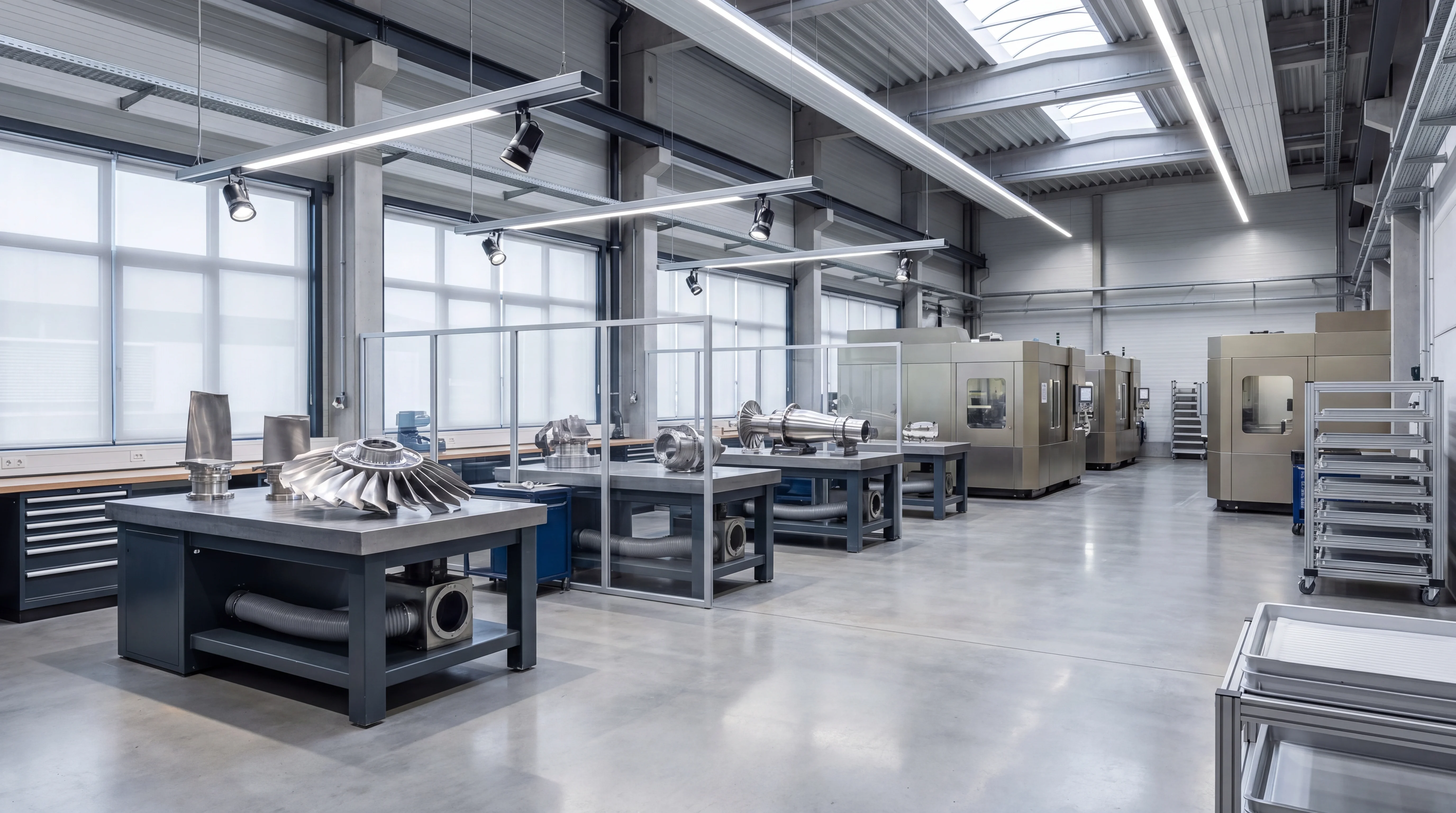
Mechanical Polishing: Methods Covered
Each method below has its own acceptance criteria and finishing equipment. The intake directs the part to the finishing facility with the appropriate method and accreditation.
Chemical-Mechanical Polishing (CMP)
Chemical-mechanical polishing (CMP) is executed by introducing a precisely formulated, abrasive-laden chemical slurry between a compliant polishing pad and the targeted workpiece. This advanced hybrid methodology simultaneously leverages chemical surface oxidation to soften the substrate material and mechanical abrasion to remove it. Such synergistic action enables extreme planarization and sub-nanometer surface finishes that cannot be achieved through conventional mechanical polishing alone. The process parameters - including downforce, platen speed, and slurry chemistry - are rigorously controlled to mitigate subsurface damage, a critical requirement for silicon wafers, precision optics, and extreme sealing surfaces. By systematically balancing chemical reactivity with mechanical friction, surface finishes are routinely driven into the single-digit angstrom range.
When absolute precision and defect-free mirror finishes are mandated by engineering specifications, CMP is deployed to meet stringent tolerances. Typical process outcomes and control metrics include:
- Reduction of surface roughness (Ra) and root-mean-square (RMS) variations to sub-nanometer thresholds, verified by high-resolution interferometry.
- Correction of localized topographical irregularities to achieve global planarization and strict optical flatness.
- Elimination of scratch-dig defects in strict alignment with ISO 10110 surface imperfection standards.
- Preservation of tight parallelism and thickness uniformity across large-diameter technical substrates.
- Complete removal of residual mechanical stress layers induced by preceding lapping or grinding operations.
Additional Techniques and Variants
Specialized variants and adjacent techniques available on engineering review. Click an entry for a short description.
Rotary Polishing (Wheel/Belt Machines)
Rotary Polishing (Wheel/Belt Machines) is supported as a variant of mechanical polishing work for Iowa-area parts. Acceptance criteria, abrasive grade, and process control points are confirmed against the customer specification at intake.
Belt Polishing / Abrasive Belt Grinding
Belt Polishing / Abrasive Belt Grinding is supported as a variant of mechanical polishing work for Iowa-area parts. Acceptance criteria, abrasive grade, and process control points are confirmed against the customer specification at intake.
Buffing (Cloth/Soft Wheel With Polishing Compound)
Buffing (Cloth/Soft Wheel With Polishing Compound) is supported as a variant of mechanical polishing work for Iowa-area parts. Acceptance criteria, abrasive grade, and process control points are confirmed against the customer specification at intake.
Mechanical Lapping
Mechanical Lapping is supported as a variant of mechanical polishing work for Iowa-area parts. Acceptance criteria, abrasive grade, and process control points are confirmed against the customer specification at intake.
Sandpaper / Abrasive Disc Polishing
Sandpaper / Abrasive Disc Polishing is supported as a variant of mechanical polishing work for Iowa-area parts. Acceptance criteria, abrasive grade, and process control points are confirmed against the customer specification at intake.
How an Iowa Mechanical Polishing Job Runs
Intake
Material, geometry, target Ra or finish standard, quantity, and ship-back address captured in the form above.
Engineering Review
Method, abrasive grade, and acceptance criteria are confirmed against the spec by the finishing facility before parts ship.
Controlled Processing
Mechanical Polishing is performed at an accredited shop with in-process profilometer checks to prevent over-polishing.
QA and Return
Final Ra, flatness, and (where specified) passivation are logged. Parts are cleaned and returned to Iowa on a logged carrier.
In-Depth Reference for Iowa
Industrial Drivers for Mechanical Polishing Across Iowa
The manufacturing landscape throughout Iowa generates sustained requirements for precise mechanical polishing, driven heavily by agricultural equipment production, advanced food processing, and specialized biomanufacturing. Along the I-380 corridor linking Iowa City and Cedar Rapids, a high concentration of food science and biotechnology facilities necessitates stainless steel fluid handling systems with heavily controlled surface topographies. Within these controlled environments, minimizing microscopic surface defects is critical to preventing biofilm accumulation, bacterial adhesion, and microbial proliferation. Processing facilities operating in Linn and Black Hawk counties routinely subject mixing vessels, high-shear impellers, and distribution piping to rigorous mechanical abrasion schedules. By systematically reducing the Roughness Average (Ra) of internal metallic surfaces, these operations mitigate cross-contamination risks and optimize both clean-in-place (CIP) and sterilize-in-place (SIP) turnaround times, addressing the intense operational pressures of high-volume production.
Further east in the Quad Cities metropolitan area, and expanding westward toward the Greater Des Moines industrial hubs, heavy machinery fabrication creates a distinct operational pressure for dimensional and functional polishing. Agricultural implements, heavy-duty hydraulic assemblies, combine harvester threshing mechanisms, and drivetrain components subjected to high-friction, high-load environments require mechanical smoothing to eliminate stress risers generated during initial casting or rough machining phases. At large-scale manufacturing campuses and regional industrial parks, such as those near the Eastern Iowa Industrial Center, metallurgical integrity is paramount. Mechanical polishing is deployed not merely for aesthetic refinement, but as a critical engineering process to reduce friction coefficients, improve wear resistance, and dramatically extend the fatigue life of carbon steel and high-alloy mechanical parts. Regional supply chains depend entirely on this precise material removal to ensure interoperability, structural soundness, and reliable long-term performance under severe Midwest field conditions.
Surface Topography Standards and Regulatory Compliance
Executing mechanical polishing for these critical commercial applications requires strict adherence to documented industrial standards and regulatory frameworks. Surface texture metrology is governed primarily by ASME B46.1, which establishes the definitive mathematical parameters for measuring roughness, waviness, and lay. Components destined for Iowa's heavily regulated pharmaceutical and food-grade sectors must strictly comply with FDA 21 CFR Part 211, which dictates that equipment surfaces shall not be reactive, additive, or absorptive. To meet these compliance benchmarks, technical polishing protocols utilize sequentially finer abrasive media - ranging from coarse aluminum oxide belts to ultra-fine silicon carbide compounds - systematically removing microscopic peaks and valleys until the prescribed topographic profile is achieved. Acceptance criteria for sanitary applications frequently mandate finishes of 15 to 20 microinches Ra, or smoother, depending heavily on the specific fluid dynamics and biological sensitivities of the end product being processed.
Verification of these exact surface finishes relies on advanced metrology equipment calibrated in strict accordance with ISO/IEC 17025 laboratory standards. Tactile profilometers and non-contact optical comparators used to certify the final polished surface must maintain unbroken NIST traceability to guarantee that measurement uncertainty remains well within acceptable tolerance grades. Furthermore, compliance documentation is tightly controlled and routinely audited by procurement departments.
The technical validation of mechanical polishing encompasses several crucial traceability requirements and acceptance criteria:
- Baseline topographic mapping to establish initial surface roughness parameters and anomaly depths prior to any mechanical intervention.
- Sequential abrasive tracking to document the progressive reduction of surface irregularities without inducing metallurgical damage, thermal distortion, or localized work hardening on sensitive alloys.
- Final profilometer certification, providing NIST-traceable data points that confirm the final Ra, Rz, or Rq values meet the strict engineering blueprints provided by the facility.
- Rigorous visual inspection protocols conducted under standardized lighting conditions to identify and immediately reject components exhibiting residual pitting, galling, or subsurface smearing.
Engineers and quality control specialists throughout Iowa rely on these rigid acceptance criteria to evaluate component readiness before deployment into production environments. For high-purity austenitic stainless steel alloys, the mechanical polishing phase is frequently an absolute prerequisite for subsequent passivation or electropolishing treatments, making it a foundational step in meeting ASTM A380 guidelines for descaling and cleaning. The constant intersection of strict FDA regulations, exacting ASME metrology standards, and the intense operational demands of heavy industry ensures that mechanical surface finishing remains a highly technical, tightly monitored engineering discipline across the state.