Precision Mechanical Polishing Services Madison
Rotary wheel, belt, buffing, lapping, and CMP operations for general surface refinement and semiconductor / optical substrates.
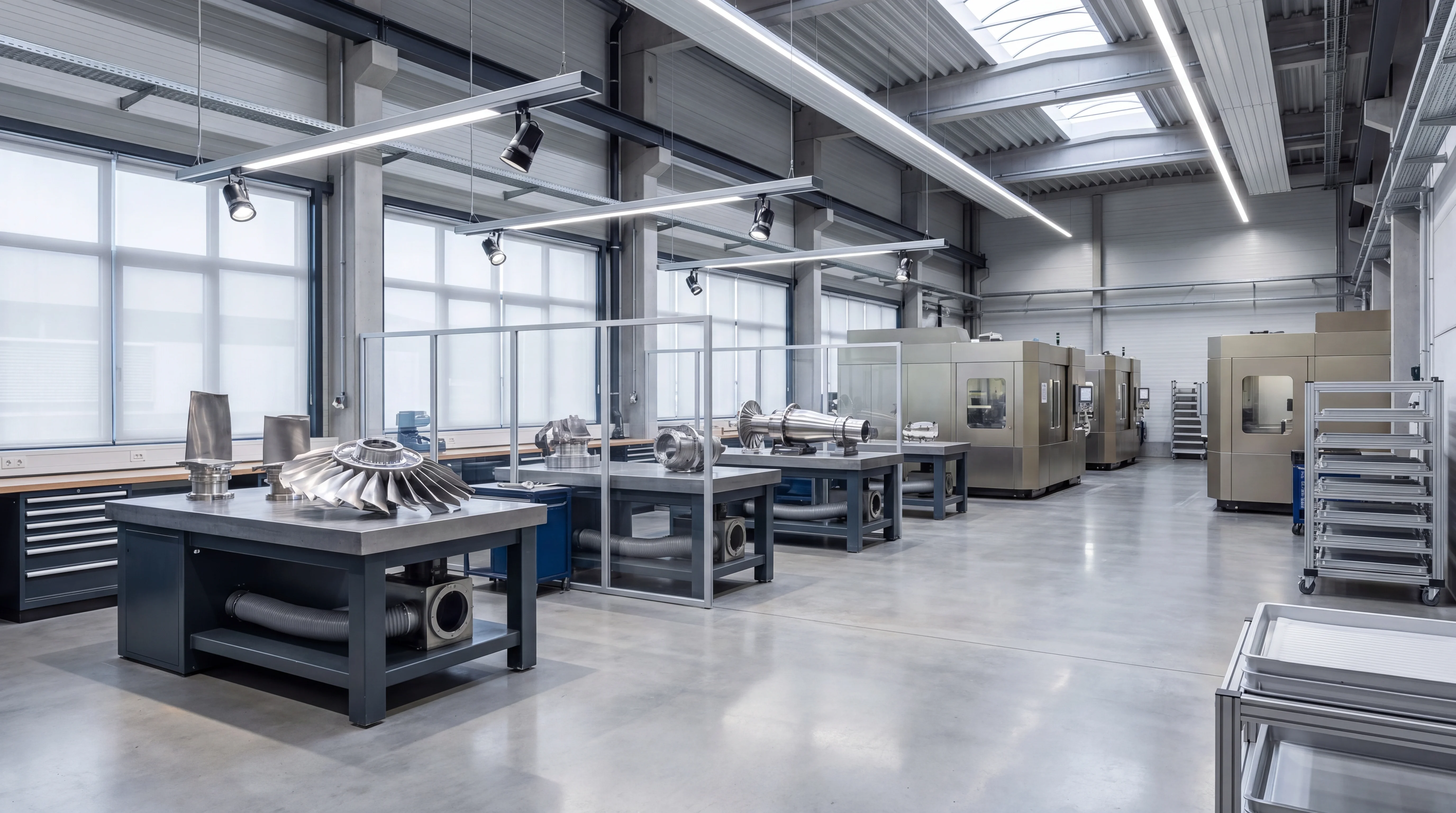
Mechanical Polishing: Methods Covered
Each method below has its own acceptance criteria and finishing equipment. The intake directs the part to the finishing facility with the appropriate method and accreditation.
Chemical-Mechanical Polishing (CMP)
Chemical-mechanical polishing (CMP) is executed by introducing a precisely formulated, abrasive-laden chemical slurry between a compliant polishing pad and the targeted workpiece. This advanced hybrid methodology simultaneously leverages chemical surface oxidation to soften the substrate material and mechanical abrasion to remove it. Such synergistic action enables extreme planarization and sub-nanometer surface finishes that cannot be achieved through conventional mechanical polishing alone. The process parameters - including downforce, platen speed, and slurry chemistry - are rigorously controlled to mitigate subsurface damage, a critical requirement for silicon wafers, precision optics, and extreme sealing surfaces. By systematically balancing chemical reactivity with mechanical friction, surface finishes are routinely driven into the single-digit angstrom range.
When absolute precision and defect-free mirror finishes are mandated by engineering specifications, CMP is deployed to meet stringent tolerances. Typical process outcomes and control metrics include:
- Reduction of surface roughness (Ra) and root-mean-square (RMS) variations to sub-nanometer thresholds, verified by high-resolution interferometry.
- Correction of localized topographical irregularities to achieve global planarization and strict optical flatness.
- Elimination of scratch-dig defects in strict alignment with ISO 10110 surface imperfection standards.
- Preservation of tight parallelism and thickness uniformity across large-diameter technical substrates.
- Complete removal of residual mechanical stress layers induced by preceding lapping or grinding operations.
Additional Techniques and Variants
Specialized variants and adjacent techniques available on engineering review. Click an entry for a short description.
Rotary Polishing (Wheel/Belt Machines)
Rotary Polishing (Wheel/Belt Machines) is supported as a variant of mechanical polishing work for Madison-area parts. Acceptance criteria, abrasive grade, and process control points are confirmed against the customer specification at intake.
Belt Polishing / Abrasive Belt Grinding
Belt Polishing / Abrasive Belt Grinding is supported as a variant of mechanical polishing work for Madison-area parts. Acceptance criteria, abrasive grade, and process control points are confirmed against the customer specification at intake.
Buffing (Cloth/Soft Wheel With Polishing Compound)
Buffing (Cloth/Soft Wheel With Polishing Compound) is supported as a variant of mechanical polishing work for Madison-area parts. Acceptance criteria, abrasive grade, and process control points are confirmed against the customer specification at intake.
Mechanical Lapping
Mechanical Lapping is supported as a variant of mechanical polishing work for Madison-area parts. Acceptance criteria, abrasive grade, and process control points are confirmed against the customer specification at intake.
Sandpaper / Abrasive Disc Polishing
Sandpaper / Abrasive Disc Polishing is supported as a variant of mechanical polishing work for Madison-area parts. Acceptance criteria, abrasive grade, and process control points are confirmed against the customer specification at intake.
How a Madison Mechanical Polishing Job Runs
Intake
Material, geometry, target Ra or finish standard, quantity, and ship-back address captured in the form above.
Engineering Review
Method, abrasive grade, and acceptance criteria are confirmed against the spec by the finishing facility before parts ship.
Controlled Processing
Mechanical Polishing is performed at an accredited shop with in-process profilometer checks to prevent over-polishing.
QA and Return
Final Ra, flatness, and (where specified) passivation are logged. Parts are cleaned and returned to Madison on a logged carrier.
In-Depth Reference for Madison
Local Demand and Industrial Applications for Mechanical Polishing in Madison, Wisconsin
The concentration of biotechnology, pharmaceutical contract manufacturing, and advanced research facilities in the Madison, Wisconsin area establishes a rigorous baseline for industrial surface finishing, particularly mechanical polishing. Situated within high-density research and development corridors such as the University Research Park and the rapidly expanding technology campuses in Fitchburg and Middleton, local operations require precise topographical modification of critical process equipment. Facilities functioning in these specialized sectors, ranging from expansive biologics production plants near the Dane County Regional Airport to complex diagnostic laboratories adjacent to the Beltline Highway, rely on the controlled alteration of surface roughness. In these advanced manufacturing environments, mechanical polishing processes are deployed upon bioreactors, shell-and-tube heat exchangers, high-purity sanitary piping networks, and large-scale mixing vessels. The fundamental objective is to achieve exact Ra (Roughness Average) values that are mechanically necessary to prevent cross-contamination, minimize fluid friction, and definitively inhibit the formation of bacterial biofilms during extended biochemical processing cycles.
The broader regional supply chain supporting Dane County's life sciences and advanced manufacturing sectors dictates uncompromising adherence to equipment cleanability protocols. Operational pressures within Madison's prominent pharmaceutical contract manufacturing organizations mandate that all product-contact surfaces undergo stringent topographical refinement prior to subsequent chemical passivation or electropolishing phases. Mechanical polishing methodologies utilize specialized rotary tooling, precision lathes, and hand-held abrasive instruments equipped with progressively finer grit media, often transitioning from 80-grit ceramic abrasives down to ultrafine aluminum oxide or silicon carbide conditioning belts. This systematic stock removal process is engineered to eliminate weld discoloration, structural micro-fissures, porosity, and cast pitting from 316L stainless steel, Hastelloy, and other exotic corrosion-resistant alloys. Furthermore, the substantial dairy processing and agricultural technology infrastructure spread across southern Wisconsin amplifies the regional necessity for mechanical surface refinement. Within these facilities, expansive networks of sanitary transport lines, evaporation silos, and holding tanks must be mechanically polished to withstand the highly caustic chemicals utilized during rigorous clean-in-place (CIP) and sterilize-in-place (SIP) thermal cycling.
Technical Standards and Regulatory Compliance for Surface Conditioning
The execution and validation of mechanical polishing operations are governed by an intricate matrix of regulatory frameworks and standardized acceptance criteria, each precisely calibrated to the end-use environment of the components. For the life science and pharmaceutical applications that dominate the Madison commercial landscape, surface finish specifications are heavily regulated by the American Society of Mechanical Engineers (ASME) Bioprocessing Equipment (BPE) standard. Mechanical polishing must strictly conform to ASME BPE surface finish designations; for example, achieving an SF1 classification requires a mechanically polished surface with a maximum roughness of 20 micro-inches Ra, while an SF3 classification mandates a 30 micro-inch Ra maximum. The physical polishing sequence is meticulously controlled to ensure uniform multidirectional scratch patterns that do not compromise the metallurgical integrity of the substrate. Adherence to FDA 21 CFR Part 211 regulations, specifically the Current Good Manufacturing Practice (CGMP) subparts addressing equipment construction, dictates that any surface contacting in-process materials or finished drug products must not be reactive, additive, or absorptive. Modifying the metal topography through controlled mechanical polishing ensures these precise regulatory thresholds are maintained, directly facilitating effective chemical sterilization and product purity.
Beyond the pharmaceutical sector, mechanical polishing protocols executed for Madison's legacy food, beverage, and dairy processing industries are rigorously evaluated against the criteria set forth by 3-A Sanitary Standards. To maintain compliance, these standards dictate that metallic product contact surfaces must possess a finish that is at least as smooth as a standard No. 4 ground finish on stainless steel sheets, which correlates to a maximum Ra value of 32 micro-inches. Verification of these tolerances is not achieved through visual estimation; rather, precision surface profilometers, strictly calibrated against National Institute of Standards and Technology (NIST) traceable reference blocks, are deployed. These instruments measure the microscopic peaks and valleys of the polished metal to confirm that the required topographical metrics have been achieved across every square inch of the treated component. Comprehensive traceability requirements demand the meticulous documentation of initial baseline roughness measurements, the final verified Ra values, the specific abrasive lot numbers utilized, and the certification status of the polishing operators. Final validation protocols integrate high-intensity visual inspections alongside fiber-optic boroscopic examinations of internal pipe welds to guarantee the total eradication of microscopic surface anomalies that could potentially harbor pathogens or disrupt laminar fluid dynamics within the processing systems.