Precision Mechanical Polishing Services Milwaukee
Rotary wheel, belt, buffing, lapping, and CMP operations for general surface refinement and semiconductor / optical substrates.
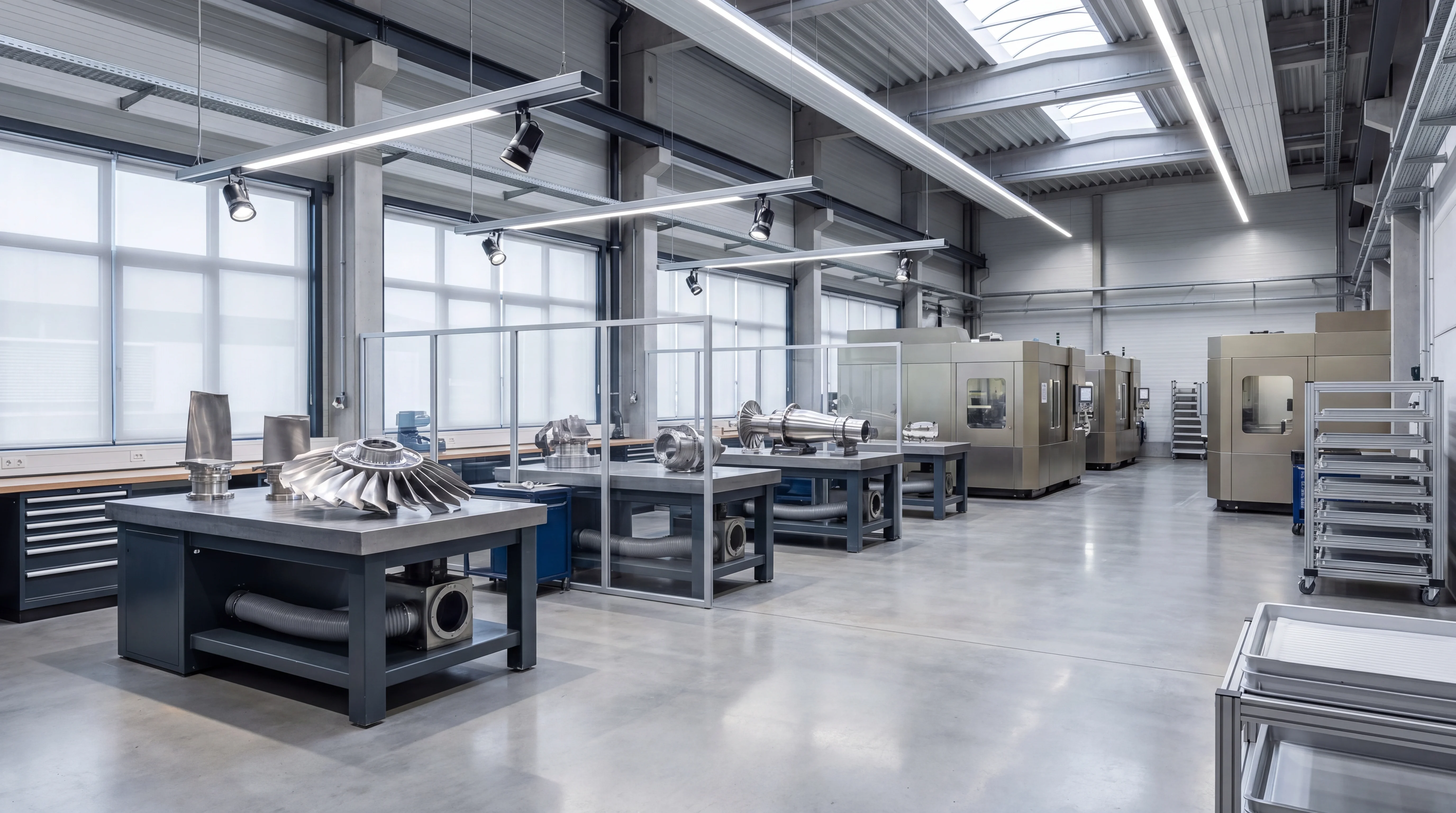
Mechanical Polishing: Methods Covered
Each method below has its own acceptance criteria and finishing equipment. The intake directs the part to the finishing facility with the appropriate method and accreditation.
Chemical-Mechanical Polishing (CMP)
Chemical-mechanical polishing (CMP) is executed by introducing a precisely formulated, abrasive-laden chemical slurry between a compliant polishing pad and the targeted workpiece. This advanced hybrid methodology simultaneously leverages chemical surface oxidation to soften the substrate material and mechanical abrasion to remove it. Such synergistic action enables extreme planarization and sub-nanometer surface finishes that cannot be achieved through conventional mechanical polishing alone. The process parameters - including downforce, platen speed, and slurry chemistry - are rigorously controlled to mitigate subsurface damage, a critical requirement for silicon wafers, precision optics, and extreme sealing surfaces. By systematically balancing chemical reactivity with mechanical friction, surface finishes are routinely driven into the single-digit angstrom range.
When absolute precision and defect-free mirror finishes are mandated by engineering specifications, CMP is deployed to meet stringent tolerances. Typical process outcomes and control metrics include:
- Reduction of surface roughness (Ra) and root-mean-square (RMS) variations to sub-nanometer thresholds, verified by high-resolution interferometry.
- Correction of localized topographical irregularities to achieve global planarization and strict optical flatness.
- Elimination of scratch-dig defects in strict alignment with ISO 10110 surface imperfection standards.
- Preservation of tight parallelism and thickness uniformity across large-diameter technical substrates.
- Complete removal of residual mechanical stress layers induced by preceding lapping or grinding operations.
Additional Techniques and Variants
Specialized variants and adjacent techniques available on engineering review. Click an entry for a short description.
Rotary Polishing (Wheel/Belt Machines)
Rotary Polishing (Wheel/Belt Machines) is supported as a variant of mechanical polishing work for Milwaukee-area parts. Acceptance criteria, abrasive grade, and process control points are confirmed against the customer specification at intake.
Belt Polishing / Abrasive Belt Grinding
Belt Polishing / Abrasive Belt Grinding is supported as a variant of mechanical polishing work for Milwaukee-area parts. Acceptance criteria, abrasive grade, and process control points are confirmed against the customer specification at intake.
Buffing (Cloth/Soft Wheel With Polishing Compound)
Buffing (Cloth/Soft Wheel With Polishing Compound) is supported as a variant of mechanical polishing work for Milwaukee-area parts. Acceptance criteria, abrasive grade, and process control points are confirmed against the customer specification at intake.
Mechanical Lapping
Mechanical Lapping is supported as a variant of mechanical polishing work for Milwaukee-area parts. Acceptance criteria, abrasive grade, and process control points are confirmed against the customer specification at intake.
Sandpaper / Abrasive Disc Polishing
Sandpaper / Abrasive Disc Polishing is supported as a variant of mechanical polishing work for Milwaukee-area parts. Acceptance criteria, abrasive grade, and process control points are confirmed against the customer specification at intake.
How a Milwaukee Mechanical Polishing Job Runs
Intake
Material, geometry, target Ra or finish standard, quantity, and ship-back address captured in the form above.
Engineering Review
Method, abrasive grade, and acceptance criteria are confirmed against the spec by the finishing facility before parts ship.
Controlled Processing
Mechanical Polishing is performed at an accredited shop with in-process profilometer checks to prevent over-polishing.
QA and Return
Final Ra, flatness, and (where specified) passivation are logged. Parts are cleaned and returned to Milwaukee on a logged carrier.
In-Depth Reference for Milwaukee
Industrial Drivers for Mechanical Polishing in the Milwaukee Metro Area
The demand for precise mechanical polishing in Milwaukee, Wisconsin, is fundamentally rooted in the city's historical and contemporary status as a hub for heavy manufacturing and specialized food and beverage production. In the Menomonee Valley industrial corridor, the concentration of equipment manufacturers and metal fabrication facilities necessitates rigorous surface finishing to meet the operational requirements of regional supply chains. The legacy of Milwaukee as a center for industrial excellence persists through the operations of major entities such as the Molson Coors brewing complex in Miller Valley and the various stainless steel vessel manufacturers located near the Port of Milwaukee and the Harbor District. These facilities require mechanical polishing to ensure that internal surfaces of fermentation tanks, process piping, and heat exchangers maintain specific roughness average (Ra) values, which are critical for preventing organic buildup and ensuring efficient sanitation cycles. Furthermore, the Granville area and the Bradley Commerce Center house significant clusters of industrial automation and power transmission companies, such as Rockwell Automation and Rexnord, where mechanical polishing is utilized to achieve the high-tolerance finishes required for critical mechanical components, bearing seats, and seal interfaces. The presence of GE Healthcare and other medical imaging and device manufacturers in the Milwaukee-Waukesha-West Allis metropolitan area further drives the need for mechanical finishing of structural frames and internal components that must comply with strict hygiene and aesthetic standards.
Beyond the core manufacturing sectors, the Milwaukee 7 (M-7) regional economic partnership highlights the growth of the water technology cluster, centered around the Global Water Center in the downtown area. This sector involves numerous firms specializing in filtration, purification, and flow control systems that rely on mechanically polished stainless steel to prevent corrosion and maintain flow laminarization. The geographic concentration of these industries along the Interstate 94 and Interstate 41 corridors creates a localized ecosystem where mechanical polishing is a functional necessity for the longevity of infrastructure. Regulatory pressures from the Milwaukee Metropolitan Sewerage District (MMSD) regarding industrial discharge also influence the regional preference for mechanical polishing over chemical alternatives, as mechanical methods provide a controlled, predictable means of achieving surface goals without the environmental complexities of large-scale pickling or electropolishing baths. The integration of mechanical finishing into the local aerospace and defense supply chains, particularly for components moving through General Mitchell International Airport logistics hubs, ensures that parts meet the fatigue resistance and stress-corrosion cracking benchmarks required for high-performance applications in variable Midwestern climates. These processes are essential for the maintenance of structural integrity in parts subjected to the thermal cycling and humidity profiles characteristic of the Great Lakes region.
Technical Frameworks and Regulatory Compliance for Milwaukee Polishing Services
Mechanical polishing operations within the Milwaukee industrial landscape are governed by a complex array of technical standards and regulatory frameworks that vary by sector. For facilities supporting the pharmaceutical and biotechnology industries, compliance with FDA 21 CFR Part 211 (Current Good Manufacturing Practice) is paramount. Surface finishes must be systematically documented through profilometry to confirm adherence to ASME BPE (Bioprocessing Equipment) standards. In these applications, mechanical polishing often proceeds through a defined sequence of abrasive grits - typically starting with 80 or 120 grit and progressing to 240, 320, or higher - to reach a target Ra of 20 micro-inches or less. The resulting surface must be free of pits, scratches, and crevices, as verified by visual inspection and calibrated surface roughness testers. Within the regional dairy and food processing industry, which is a cornerstone of the Wisconsin economy, 3-A Sanitary Standards serve as the primary benchmark for surface integrity. These standards mandate that all product-contact surfaces be polished to a finish that is easily cleanable and resistant to the harbor of microorganisms, requiring strict control over the mechanical pressure and directional consistency of the polishing media to avoid surface smearing or the occlusion of contaminants during the finishing process.
Traceability and quality assurance in mechanical polishing are further bolstered by adherence to ISO 9001 quality management systems and ASTM standards. ASTM A380 and ASTM A967 provide guidelines for the cleaning, descaling, and passivation of stainless steel parts, where mechanical polishing often serves as the initial step in removing heat tint and scale from welding operations. In the heavy machinery and power generation sectors prevalent in Southeast Wisconsin, mechanical polishing must align with tolerance grades specified in technical drawings, often requiring NIST-traceable calibration for all measuring instruments used to verify dimensional accuracy post-polishing. The acceptance criteria for these services involve comprehensive documentation, including material certifications and finish reports that detail the specific abrasive types used, such as aluminum oxide or ceramic blends, to ensure no cross-contamination of iron particles occurs on stainless steel substrates. This level of technical rigor ensures that components polished in the Milwaukee region meet the durability and safety requirements of global markets, whether they are destined for a local dairy facility in Washington County or a sophisticated medical laboratory in the Milwaukee Regional Medical Center. Consistent application of these standards ensures that mechanical polishing remains a reliable method for meeting the stringent surface requirements of Milwaukee's diverse industrial base.