Precision Mechanical Polishing Services Racine
Rotary wheel, belt, buffing, lapping, and CMP operations for general surface refinement and semiconductor / optical substrates.
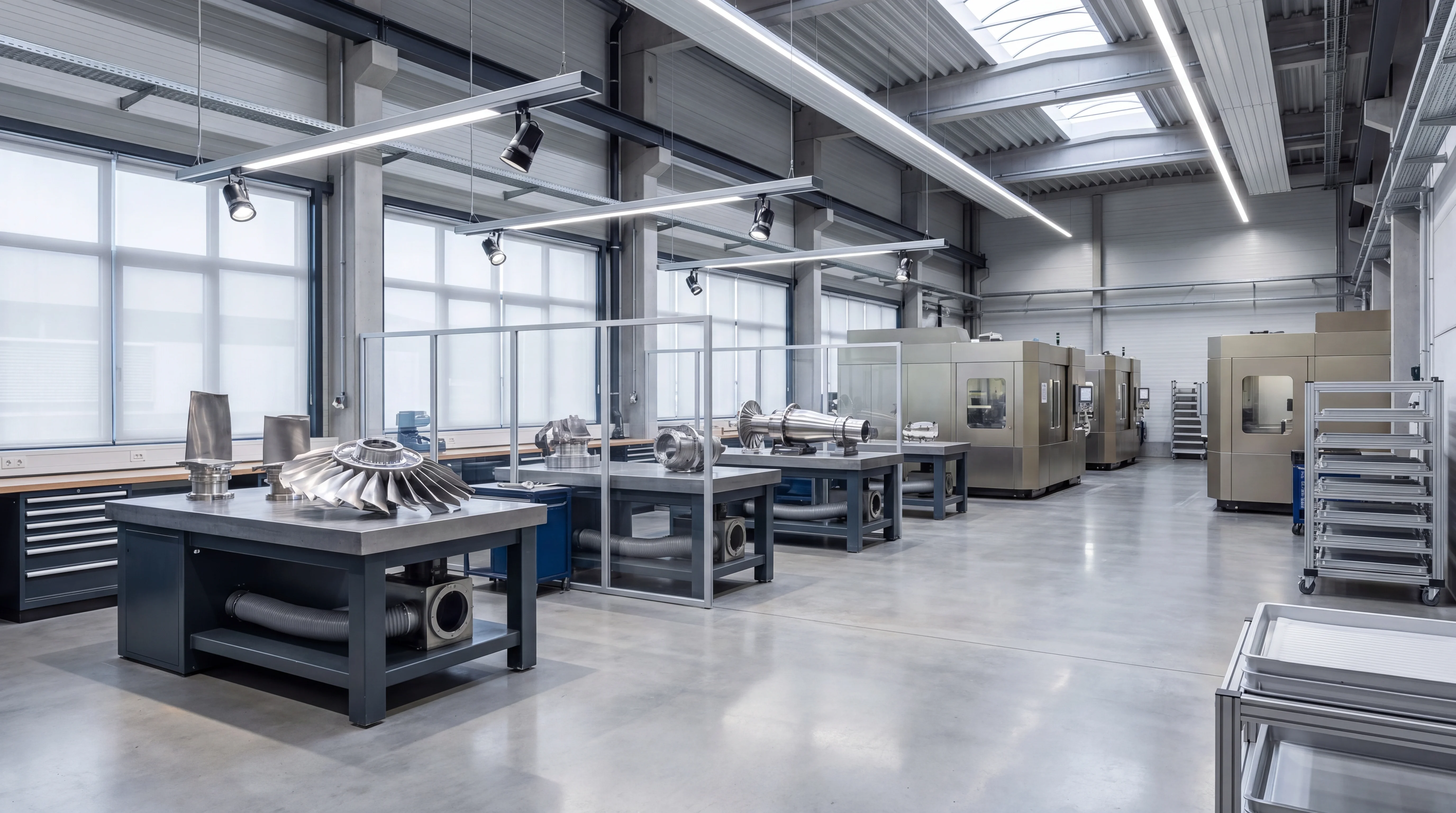
Mechanical Polishing: Methods Covered
Each method below has its own acceptance criteria and finishing equipment. The intake directs the part to the finishing facility with the appropriate method and accreditation.
Chemical-Mechanical Polishing (CMP)
Chemical-mechanical polishing (CMP) is executed by introducing a precisely formulated, abrasive-laden chemical slurry between a compliant polishing pad and the targeted workpiece. This advanced hybrid methodology simultaneously leverages chemical surface oxidation to soften the substrate material and mechanical abrasion to remove it. Such synergistic action enables extreme planarization and sub-nanometer surface finishes that cannot be achieved through conventional mechanical polishing alone. The process parameters - including downforce, platen speed, and slurry chemistry - are rigorously controlled to mitigate subsurface damage, a critical requirement for silicon wafers, precision optics, and extreme sealing surfaces. By systematically balancing chemical reactivity with mechanical friction, surface finishes are routinely driven into the single-digit angstrom range.
When absolute precision and defect-free mirror finishes are mandated by engineering specifications, CMP is deployed to meet stringent tolerances. Typical process outcomes and control metrics include:
- Reduction of surface roughness (Ra) and root-mean-square (RMS) variations to sub-nanometer thresholds, verified by high-resolution interferometry.
- Correction of localized topographical irregularities to achieve global planarization and strict optical flatness.
- Elimination of scratch-dig defects in strict alignment with ISO 10110 surface imperfection standards.
- Preservation of tight parallelism and thickness uniformity across large-diameter technical substrates.
- Complete removal of residual mechanical stress layers induced by preceding lapping or grinding operations.
Additional Techniques and Variants
Specialized variants and adjacent techniques available on engineering review. Click an entry for a short description.
Rotary Polishing (Wheel/Belt Machines)
Rotary Polishing (Wheel/Belt Machines) is supported as a variant of mechanical polishing work for Racine-area parts. Acceptance criteria, abrasive grade, and process control points are confirmed against the customer specification at intake.
Belt Polishing / Abrasive Belt Grinding
Belt Polishing / Abrasive Belt Grinding is supported as a variant of mechanical polishing work for Racine-area parts. Acceptance criteria, abrasive grade, and process control points are confirmed against the customer specification at intake.
Buffing (Cloth/Soft Wheel With Polishing Compound)
Buffing (Cloth/Soft Wheel With Polishing Compound) is supported as a variant of mechanical polishing work for Racine-area parts. Acceptance criteria, abrasive grade, and process control points are confirmed against the customer specification at intake.
Mechanical Lapping
Mechanical Lapping is supported as a variant of mechanical polishing work for Racine-area parts. Acceptance criteria, abrasive grade, and process control points are confirmed against the customer specification at intake.
Sandpaper / Abrasive Disc Polishing
Sandpaper / Abrasive Disc Polishing is supported as a variant of mechanical polishing work for Racine-area parts. Acceptance criteria, abrasive grade, and process control points are confirmed against the customer specification at intake.
How a Racine Mechanical Polishing Job Runs
Intake
Material, geometry, target Ra or finish standard, quantity, and ship-back address captured in the form above.
Engineering Review
Method, abrasive grade, and acceptance criteria are confirmed against the spec by the finishing facility before parts ship.
Controlled Processing
Mechanical Polishing is performed at an accredited shop with in-process profilometer checks to prevent over-polishing.
QA and Return
Final Ra, flatness, and (where specified) passivation are logged. Parts are cleaned and returned to Racine on a logged carrier.
In-Depth Reference for Racine
Industrial Drivers in the Racine Manufacturing Corridor
The manufacturing corridor in Racine, Wisconsin, along the western shore of Lake Michigan and extending westward toward Interstate 94, maintains a heavy concentration of industrial production that relies directly on precision mechanical polishing. In industrial zones like the Grandview Industrial Park and facilities located along the Root River, operations in food processing, chemical production, and heavy equipment manufacturing require highly controlled surface finishes. Companies such as InSinkErator and SC Johnson, alongside regional dairies and agricultural equipment suppliers, generate consistent demand for refined metal surfaces. Mechanical polishing in this region is essential to prevent material buildup, reduce friction in mechanical assemblies, and eliminate microscopic crevices where bacteria or corrosive agents could collect. This geographic hub, situated between the Milwaukee and Chicago metro areas, serves as a vital link in the regional food-grade and industrial supply chains, necessitating surfaces that can withstand continuous operational stress and rigorous chemical sanitization cycles.
Technical Specifications and Compliance Frameworks
Mechanical polishing operations within Racine facilities must adhere to strict dimensional and sanitary regulatory frameworks depending on the target application. For food-contact equipment and consumer goods production, surface finishes are executed to align with FDA 21 CFR Part 211 guidelines for pharmaceutical manufacturing equipment, as well as 3-A Sanitary Standards for dairy and food processing. Surface roughness is quantified using roughness average (Ra) values, with high-purity applications frequently requiring a finish of 15 Ra (0.38 micrometers) or lower, verified via calibrated profilometer testing. Standard mechanical abrasive procedures utilize sequentially finer grit sequences, often culminating in silicon carbide or aluminum oxide compounds to achieve the specified micro-inch finish. Traceability is maintained through comprehensive material test reports (MTRs) and surface roughness certification documents, ensuring that all polished components comply with ASTM standards and local environmental safety protocols governing industrial emissions and particulate control during processing.