Precision Mechanical Polishing Services Rockford
Rotary wheel, belt, buffing, lapping, and CMP operations for general surface refinement and semiconductor / optical substrates.
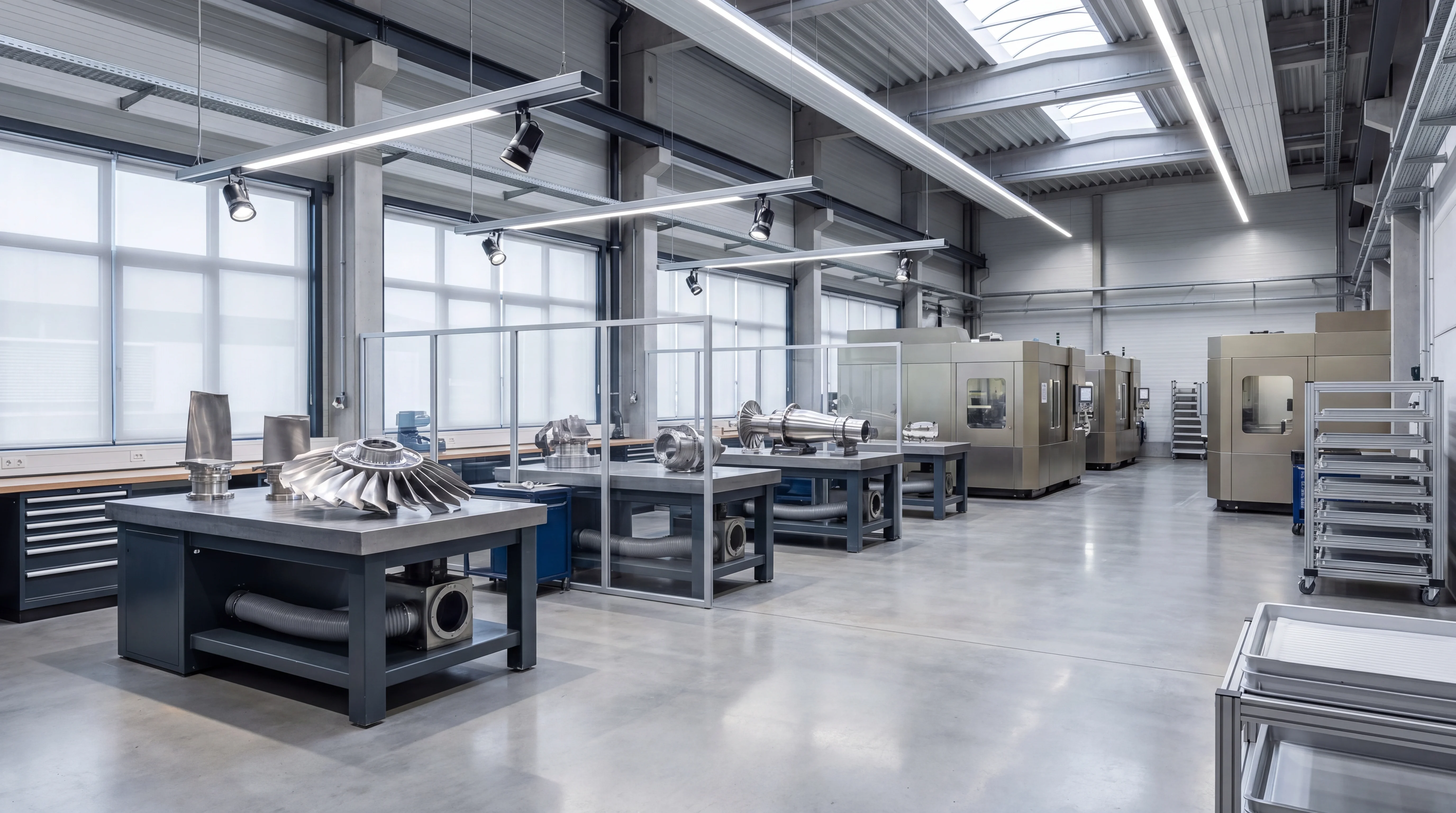
Mechanical Polishing: Methods Covered
Each method below has its own acceptance criteria and finishing equipment. The intake directs the part to the finishing facility with the appropriate method and accreditation.
Chemical-Mechanical Polishing (CMP)
Chemical-mechanical polishing (CMP) is executed by introducing a precisely formulated, abrasive-laden chemical slurry between a compliant polishing pad and the targeted workpiece. This advanced hybrid methodology simultaneously leverages chemical surface oxidation to soften the substrate material and mechanical abrasion to remove it. Such synergistic action enables extreme planarization and sub-nanometer surface finishes that cannot be achieved through conventional mechanical polishing alone. The process parameters - including downforce, platen speed, and slurry chemistry - are rigorously controlled to mitigate subsurface damage, a critical requirement for silicon wafers, precision optics, and extreme sealing surfaces. By systematically balancing chemical reactivity with mechanical friction, surface finishes are routinely driven into the single-digit angstrom range.
When absolute precision and defect-free mirror finishes are mandated by engineering specifications, CMP is deployed to meet stringent tolerances. Typical process outcomes and control metrics include:
- Reduction of surface roughness (Ra) and root-mean-square (RMS) variations to sub-nanometer thresholds, verified by high-resolution interferometry.
- Correction of localized topographical irregularities to achieve global planarization and strict optical flatness.
- Elimination of scratch-dig defects in strict alignment with ISO 10110 surface imperfection standards.
- Preservation of tight parallelism and thickness uniformity across large-diameter technical substrates.
- Complete removal of residual mechanical stress layers induced by preceding lapping or grinding operations.
Additional Techniques and Variants
Specialized variants and adjacent techniques available on engineering review. Click an entry for a short description.
Rotary Polishing (Wheel/Belt Machines)
Rotary Polishing (Wheel/Belt Machines) is supported as a variant of mechanical polishing work for Rockford-area parts. Acceptance criteria, abrasive grade, and process control points are confirmed against the customer specification at intake.
Belt Polishing / Abrasive Belt Grinding
Belt Polishing / Abrasive Belt Grinding is supported as a variant of mechanical polishing work for Rockford-area parts. Acceptance criteria, abrasive grade, and process control points are confirmed against the customer specification at intake.
Buffing (Cloth/Soft Wheel With Polishing Compound)
Buffing (Cloth/Soft Wheel With Polishing Compound) is supported as a variant of mechanical polishing work for Rockford-area parts. Acceptance criteria, abrasive grade, and process control points are confirmed against the customer specification at intake.
Mechanical Lapping
Mechanical Lapping is supported as a variant of mechanical polishing work for Rockford-area parts. Acceptance criteria, abrasive grade, and process control points are confirmed against the customer specification at intake.
Sandpaper / Abrasive Disc Polishing
Sandpaper / Abrasive Disc Polishing is supported as a variant of mechanical polishing work for Rockford-area parts. Acceptance criteria, abrasive grade, and process control points are confirmed against the customer specification at intake.
How a Rockford Mechanical Polishing Job Runs
Intake
Material, geometry, target Ra or finish standard, quantity, and ship-back address captured in the form above.
Engineering Review
Method, abrasive grade, and acceptance criteria are confirmed against the spec by the finishing facility before parts ship.
Controlled Processing
Mechanical Polishing is performed at an accredited shop with in-process profilometer checks to prevent over-polishing.
QA and Return
Final Ra, flatness, and (where specified) passivation are logged. Parts are cleaned and returned to Rockford on a logged carrier.
In-Depth Reference for Rockford
Industrial Demand for Mechanical Polishing in Rockford, Illinois
The industrial landscape of Rockford, Illinois, specifically within the Rock River Valley and the greater Winnebago County region, serves as a significant driver for mechanical polishing demand. This area, historically recognized as a global center for the machine tool and fastener industries, has transitioned into a high-technology manufacturing hub dominated by aerospace, defense, and heavy equipment sectors. The presence of major corporate campuses such as Woodward, Inc. on North Perryville Road and the extensive Collins Aerospace facilities near the Harrison Avenue corridor necessitates precision surface finishing for flight-critical components, including fuel nozzles, hydraulic actuators, and turbine elements. The regional supply chain, extending through the I-39 and I-90 industrial corridors, includes a multitude of specialized machining centers and R&D facilities that require mechanical polishing to achieve specific functional surface profiles. We cover Illinois and Wisconsin to support these localized manufacturing requirements.
Industrial parks such as the Southrock Industrial Park and the Global Trade Park near the Chicago Rockford International Airport (RFD) house numerous Tier 2 and Tier 3 suppliers that must adhere to the exacting surface requirements of the aerospace cluster. Furthermore, the legacy of the 'Screw Capital of the World' persists in the local production of specialized hardware and tooling, where mechanical polishing is utilized to reduce friction and improve the wear resistance of cold-heading dies and high-tensile fasteners. Regional logistics and the heavy manufacturing presence in surrounding areas like Belvidere and Loves Park further concentrate the need for high-tolerance finishing to support the automotive assembly and agricultural machinery sectors. The concentration of these industries creates a unique operational environment where mechanical polishing is an essential phase of the production cycle, driven by the need for structural integrity and performance in high-stress applications.
---Technical and Compliance Context for Mechanical Polishing
Technical compliance for mechanical polishing in the Rockford industrial sector is established through a framework of international standards and rigorous quality control protocols. Surface topography is primarily evaluated using the ASME B46.1 standard, which classifies surface texture and provides the nomenclature for Roughness Average (Ra) and Root Mean Square (Rq) measurements. In the aerospace-centric manufacturing environment of Northern Illinois, mechanical polishing processes are often integrated into AS9100 quality management systems, requiring documented procedures and validated results to ensure that surface refinement does not introduce deleterious effects such as hydrogen embrittlement or excessive residual stress. For components utilized in fluid handling or chemical processing, compliance with ASTM G93 is frequently mandated to ensure that the polishing process results in a surface free of particulate and hydrocarbon contaminants.
Traceability is a fundamental requirement, with all measurement equipment calibrated against National Institute of Standards and Technology (NIST) traceable masters to provide empirical evidence of conformance to engineering drawings. Additionally, facilities operating under the oversight of the Food and Drug Administration (FDA) or serving the pharmaceutical industry must align their mechanical polishing outputs with 21 CFR Part 211 guidelines, ensuring that contact surfaces are non-reactive, non-additive, and non-absorptive. The technical execution of mechanical polishing involves a multi-stage progression of abrasive media, typically ranging from 60-grit coarse removal to 600-grit or finer final finishing, depending on the specified tolerance grade. Acceptance criteria are often defined by the end-use environment, where a 32 Ra finish might suffice for external structural components, whereas internal valve seats or bearings may require a 4 Ra to 8 Ra isotropic finish. This structured approach to surface refinement ensures that every polished component meets the necessary safety and performance benchmarks required by the regulatory frameworks governing the Rockford industrial base.