Precision Mechanical Polishing Services Schaumburg
Rotary wheel, belt, buffing, lapping, and CMP operations for general surface refinement and semiconductor / optical substrates.
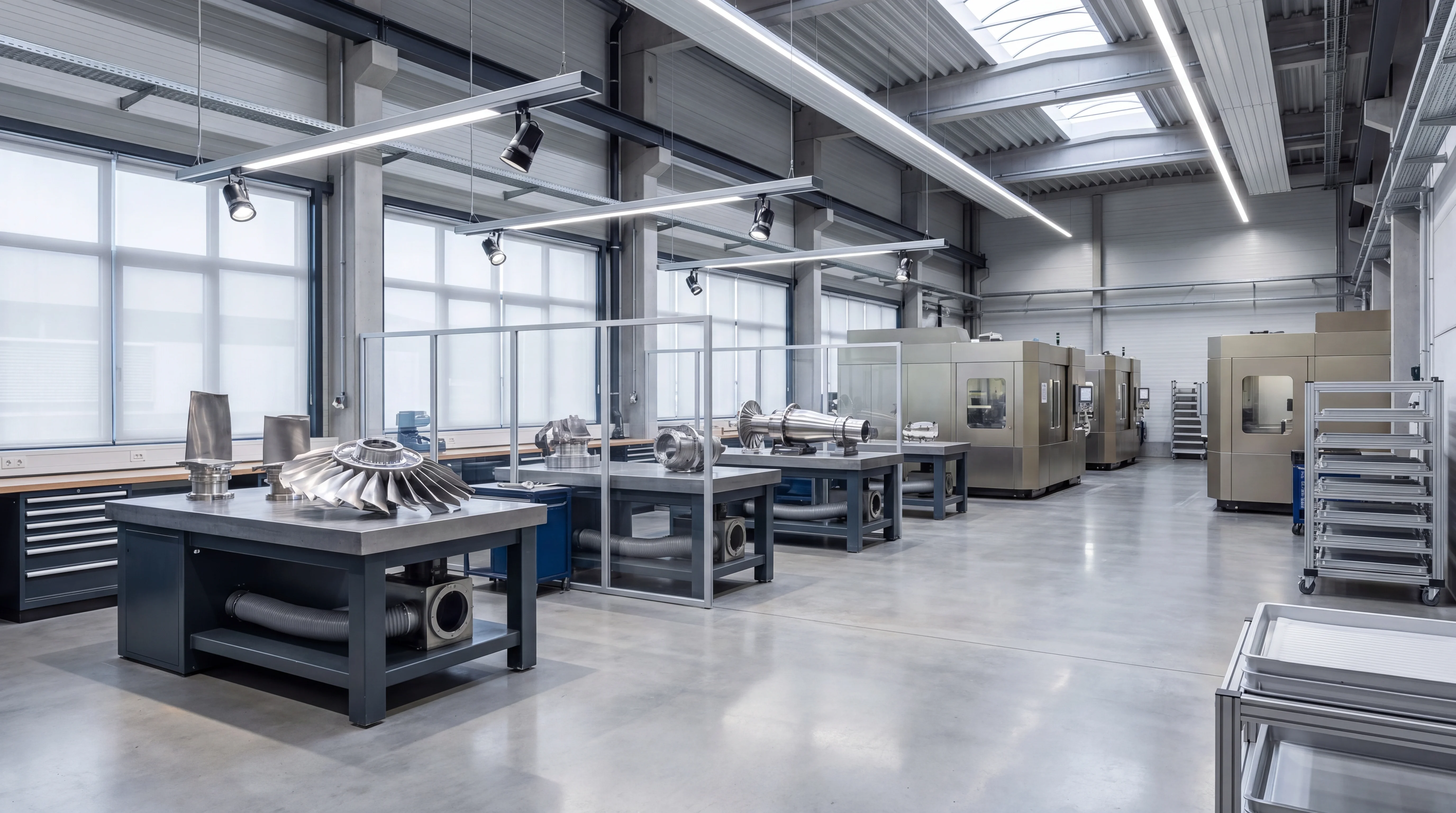
Mechanical Polishing: Methods Covered
Each method below has its own acceptance criteria and finishing equipment. The intake directs the part to the finishing facility with the appropriate method and accreditation.
Chemical-Mechanical Polishing (CMP)
Chemical-mechanical polishing (CMP) is executed by introducing a precisely formulated, abrasive-laden chemical slurry between a compliant polishing pad and the targeted workpiece. This advanced hybrid methodology simultaneously leverages chemical surface oxidation to soften the substrate material and mechanical abrasion to remove it. Such synergistic action enables extreme planarization and sub-nanometer surface finishes that cannot be achieved through conventional mechanical polishing alone. The process parameters - including downforce, platen speed, and slurry chemistry - are rigorously controlled to mitigate subsurface damage, a critical requirement for silicon wafers, precision optics, and extreme sealing surfaces. By systematically balancing chemical reactivity with mechanical friction, surface finishes are routinely driven into the single-digit angstrom range.
When absolute precision and defect-free mirror finishes are mandated by engineering specifications, CMP is deployed to meet stringent tolerances. Typical process outcomes and control metrics include:
- Reduction of surface roughness (Ra) and root-mean-square (RMS) variations to sub-nanometer thresholds, verified by high-resolution interferometry.
- Correction of localized topographical irregularities to achieve global planarization and strict optical flatness.
- Elimination of scratch-dig defects in strict alignment with ISO 10110 surface imperfection standards.
- Preservation of tight parallelism and thickness uniformity across large-diameter technical substrates.
- Complete removal of residual mechanical stress layers induced by preceding lapping or grinding operations.
Additional Techniques and Variants
Specialized variants and adjacent techniques available on engineering review. Click an entry for a short description.
Rotary Polishing (Wheel/Belt Machines)
Rotary Polishing (Wheel/Belt Machines) is supported as a variant of mechanical polishing work for Schaumburg-area parts. Acceptance criteria, abrasive grade, and process control points are confirmed against the customer specification at intake.
Belt Polishing / Abrasive Belt Grinding
Belt Polishing / Abrasive Belt Grinding is supported as a variant of mechanical polishing work for Schaumburg-area parts. Acceptance criteria, abrasive grade, and process control points are confirmed against the customer specification at intake.
Buffing (Cloth/Soft Wheel With Polishing Compound)
Buffing (Cloth/Soft Wheel With Polishing Compound) is supported as a variant of mechanical polishing work for Schaumburg-area parts. Acceptance criteria, abrasive grade, and process control points are confirmed against the customer specification at intake.
Mechanical Lapping
Mechanical Lapping is supported as a variant of mechanical polishing work for Schaumburg-area parts. Acceptance criteria, abrasive grade, and process control points are confirmed against the customer specification at intake.
Sandpaper / Abrasive Disc Polishing
Sandpaper / Abrasive Disc Polishing is supported as a variant of mechanical polishing work for Schaumburg-area parts. Acceptance criteria, abrasive grade, and process control points are confirmed against the customer specification at intake.
How a Schaumburg Mechanical Polishing Job Runs
Intake
Material, geometry, target Ra or finish standard, quantity, and ship-back address captured in the form above.
Engineering Review
Method, abrasive grade, and acceptance criteria are confirmed against the spec by the finishing facility before parts ship.
Controlled Processing
Mechanical Polishing is performed at an accredited shop with in-process profilometer checks to prevent over-polishing.
QA and Return
Final Ra, flatness, and (where specified) passivation are logged. Parts are cleaned and returned to Schaumburg on a logged carrier.
In-Depth Reference for Schaumburg
Regional Demand Drivers in Schaumburg's Golden Corridor
Situated within the densely industrialized Interstate 90 Golden Corridor, Schaumburg, Illinois, functions as a high-concentration hub for advanced manufacturing, automation technology, and precision machining. Facilities operating throughout the village's commercial sectors rely extensively on mechanical polishing to modify surface topographies on complex metal components. The regional manufacturing ecosystem, which includes critical aerospace contractors and medical device component suppliers distributed near the Elgin-O'Hare Western Access route, demands rigorous surface refinement to eliminate microscopic stress risers, remove machining burrs, and prepare substrates for subsequent passivating or plating processes. Within this specific geographic footprint, mechanical polishing is applied to everything from hardened steel gears used in heavy automation to specialized titanium alloys requiring exact friction coefficients. Regional supply chains dictate that tier-two and tier-three suppliers operating in Cook County must frequently deliver finished parts that integrate flawlessly into larger assemblies produced by primary integrators. This necessitates a highly controlled polishing process to ensure that all dimensional tolerances and surface roughness parameters are strictly maintained prior to final delivery.
The operational pressures on Schaumburg-based manufacturing plants are driven by stringent end-user requirements and the necessity for rapid supply chain integration. In sectors where high-cycle fatigue is a primary failure mode, such as aerospace and heavy industrial equipment, mechanical polishing serves as a mandatory processing step rather than an optional cosmetic enhancement. Polishing methods utilizing abrasive belts, rotary wheels, and specialized compounding agents are deployed to methodically remove surface material, thereby improving the fatigue life of the finished component. Local production managers must balance high-throughput production schedules with the unforgiving geometric tolerances demanded by regional aerospace and defense contracts. Consequently, the mechanical polishing processes integrated into these local supply chains must be highly repeatable, leveraging controlled abrasive media and consistent application pressures to guarantee uniform material removal across batch-produced components.
Regulatory Frameworks and Surface Finish Compliance
Compliance with documented industry standards is central to all mechanical polishing protocols executed for components entering critical service environments. Surface texture evaluation is governed heavily by ASME B46.1, which establishes the parameters for measuring surface roughness, waviness, and lay. For Schaumburg manufacturers producing components for the pharmaceutical or food processing sectors, mechanical polishing must often yield sanitary finishes that comply with FDA 21 CFR Part 211. This regulation mandates smooth, easily cleanable surfaces on processing equipment to prevent bacterial adhesion and cross-contamination, typically requiring a surface roughness average (Ra) of 15 to 20 microinches or lower. Achieving these highly specific tolerance grades requires a progressive sequence of abrasive applications, systematically reducing the scratch pattern depth until the surface profile meets the exact dimensional specifications dictated by the engineering drawings. Furthermore, quality management systems aligned with ISO 9001 and AS9100 demand thorough documentation of the polishing sequence, ensuring that each step of the material removal process is executed according to validated procedures.
Verification of the final surface condition requires rigorous metrology and strict adherence to established acceptance criteria. Topographical measurements of mechanically polished surfaces are conducted utilizing contact stylus profilometers or non-contact optical metrology systems. To ensure absolute compliance with contract requirements, the calibration of these measurement instruments must maintain unbroken NIST traceability, verifying that the reported Ra, Rz, or Rmax values are accurate and legally defensible. Components destined for high-stress applications in aerospace or medical environments are subjected to rigorous inspection protocols where even minor deviations from the specified tolerance grades can result in batch rejection. The mechanical polishing process must therefore be engineered to account for the exact metallurgical properties of the substrate, controlling heat generation and abrasive friction to prevent localized metallurgical transformations or surface warping. By adhering to these strict testing and traceability requirements, precision components manufactured in Schaumburg meet the unforgiving regulatory frameworks mandated by modern industrial, medical, and aerospace engineering standards.