Precision Mechanical Polishing Services Waukesha
Rotary wheel, belt, buffing, lapping, and CMP operations for general surface refinement and semiconductor / optical substrates.
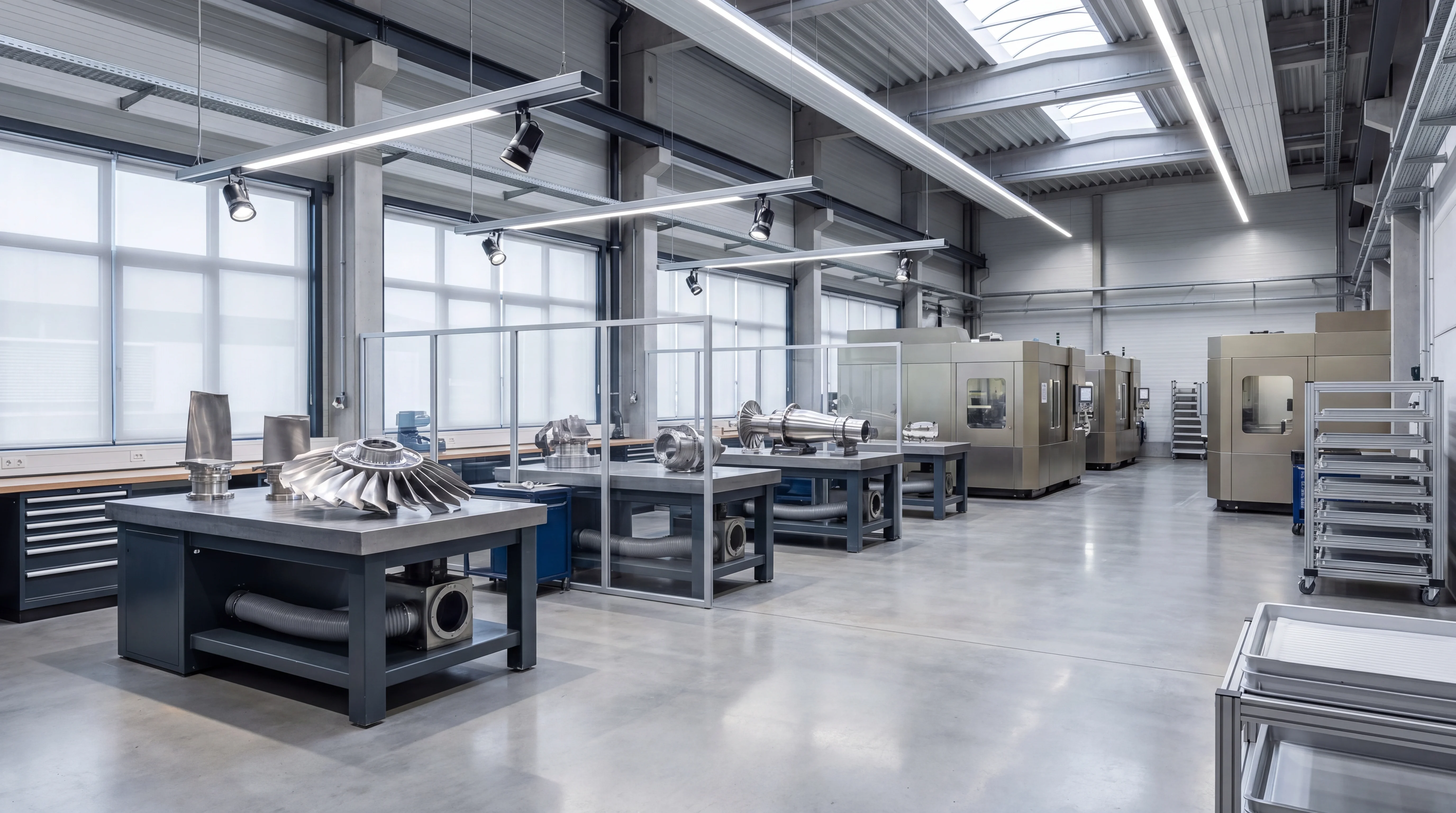
Mechanical Polishing: Methods Covered
Each method below has its own acceptance criteria and finishing equipment. The intake directs the part to the finishing facility with the appropriate method and accreditation.
Chemical-Mechanical Polishing (CMP)
Chemical-mechanical polishing (CMP) is executed by introducing a precisely formulated, abrasive-laden chemical slurry between a compliant polishing pad and the targeted workpiece. This advanced hybrid methodology simultaneously leverages chemical surface oxidation to soften the substrate material and mechanical abrasion to remove it. Such synergistic action enables extreme planarization and sub-nanometer surface finishes that cannot be achieved through conventional mechanical polishing alone. The process parameters - including downforce, platen speed, and slurry chemistry - are rigorously controlled to mitigate subsurface damage, a critical requirement for silicon wafers, precision optics, and extreme sealing surfaces. By systematically balancing chemical reactivity with mechanical friction, surface finishes are routinely driven into the single-digit angstrom range.
When absolute precision and defect-free mirror finishes are mandated by engineering specifications, CMP is deployed to meet stringent tolerances. Typical process outcomes and control metrics include:
- Reduction of surface roughness (Ra) and root-mean-square (RMS) variations to sub-nanometer thresholds, verified by high-resolution interferometry.
- Correction of localized topographical irregularities to achieve global planarization and strict optical flatness.
- Elimination of scratch-dig defects in strict alignment with ISO 10110 surface imperfection standards.
- Preservation of tight parallelism and thickness uniformity across large-diameter technical substrates.
- Complete removal of residual mechanical stress layers induced by preceding lapping or grinding operations.
Additional Techniques and Variants
Specialized variants and adjacent techniques available on engineering review. Click an entry for a short description.
Rotary Polishing (Wheel/Belt Machines)
Rotary Polishing (Wheel/Belt Machines) is supported as a variant of mechanical polishing work for Waukesha-area parts. Acceptance criteria, abrasive grade, and process control points are confirmed against the customer specification at intake.
Belt Polishing / Abrasive Belt Grinding
Belt Polishing / Abrasive Belt Grinding is supported as a variant of mechanical polishing work for Waukesha-area parts. Acceptance criteria, abrasive grade, and process control points are confirmed against the customer specification at intake.
Buffing (Cloth/Soft Wheel With Polishing Compound)
Buffing (Cloth/Soft Wheel With Polishing Compound) is supported as a variant of mechanical polishing work for Waukesha-area parts. Acceptance criteria, abrasive grade, and process control points are confirmed against the customer specification at intake.
Mechanical Lapping
Mechanical Lapping is supported as a variant of mechanical polishing work for Waukesha-area parts. Acceptance criteria, abrasive grade, and process control points are confirmed against the customer specification at intake.
Sandpaper / Abrasive Disc Polishing
Sandpaper / Abrasive Disc Polishing is supported as a variant of mechanical polishing work for Waukesha-area parts. Acceptance criteria, abrasive grade, and process control points are confirmed against the customer specification at intake.
How a Waukesha Mechanical Polishing Job Runs
Intake
Material, geometry, target Ra or finish standard, quantity, and ship-back address captured in the form above.
Engineering Review
Method, abrasive grade, and acceptance criteria are confirmed against the spec by the finishing facility before parts ship.
Controlled Processing
Mechanical Polishing is performed at an accredited shop with in-process profilometer checks to prevent over-polishing.
QA and Return
Final Ra, flatness, and (where specified) passivation are logged. Parts are cleaned and returned to Waukesha on a logged carrier.
In-Depth Reference for Waukesha
Local Demand for Mechanical Polishing in Waukesha, Wisconsin
Industrial operations within the I-94 corridor and the broader Waukesha County manufacturing sector generate sustained demand for controlled surface finishing. The region is characterized by dense concentrations in medical imaging equipment fabrication, advanced water technology infrastructure, and specialized fluid handling systems. A primary driver of mechanical polishing requirements is the local production of sanitary positive displacement pumps and flow valves. This equipment, a historical staple of the Waukesha industrial economy, heavily supplies the extensive Wisconsin dairy, brewing, and food processing sectors. Manufacturers operating out of facilities near the Waukesha Industrial Park and the corporate manufacturing zones along the Fox River produce precision stainless steel components that mandate strictly controlled surface roughness profiles.
Within the sanitary fluid handling sector, mechanical polishing serves as a critical manufacturing step required to systematically eliminate microscopic surface crevices, casting pits, and directional machining lines where biological contaminants could otherwise harbor. Furthermore, the local presence of tier-one medical technology developers necessitates advanced surface preparation for both structural and functional hardware. The fabrication of vacuum chambers, cryogenic vessels, and complex magnetic resonance imaging (MRI) support structures requires refined surface homogenization. This preparation is essential to maintain structural integrity under thermal stress, facilitate subsequent specialized coatings, and meet stringent outgassing constraints required in high-vacuum medical environments.
Beyond sanitary and medical applications, the broader heavy equipment and mining machinery sectors anchored in the greater Milwaukee metropolitan area rely on Waukesha-based finishing for hydraulic cylinder rods and complex actuation mechanisms. These high-wear industrial components require precision mechanical polishing to reduce friction coefficients, extend the lifecycle of hydraulic polyurethane seals, and prevent premature mechanical failure in extreme operational environments. Components are frequently milled from 316L stainless steel, carbon steel, or specialized aluminum alloys, requiring targeted abrasive techniques to prevent material warping or metallurgical contamination during the smoothing process. This highly integrated regional supply chain dictates that metal fabrication and machining outputs across Waukesha adhere to rigorous surface finish specifications prior to final sub-assembly integration or downstream chemical treatments.
Technical and Compliance Context for Mechanical Polishing
Surface finish refinement through mechanical polishing is governed by a precise matrix of application-specific standards, metallurgical constraints, and rigid regulatory frameworks. For mechanical components destined for the dairy and food processing sectors heavily represented in the local market, finishing protocols are meticulously engineered to satisfy 3-A Sanitary Standards. These established specifications typically mandate a maximum surface roughness average (Ra) of 32 microinches (0.8 micrometers) for all direct product-contact surfaces. Achieving these precise metrics requires a calculated, multi-step sequence utilizing progressively finer abrasive media. Operations transition carefully from aggressive material removal using coarse grit belts or rotary abrasives to high-precision fine buffing compounds, ensuring that the base metal is not thermally compromised during the friction-intensive process.
In the more stringent pharmaceutical and biotechnology applications supported by local fabricators, baseline criteria escalate to align with ASME Bioprocessing Equipment (BPE) standards. Under the ASME BPE framework, mechanical polishing must frequently achieve surface finishes of 20 to 15 microinches Ra. Specific surface finish designations, such as SF1 or SF3, dictate both the quantitative roughness limits and the acceptable visual characteristics of the processed metal. For medical device components manufactured under ISO 13485 quality management systems, mechanical polishing processes must undergo rigorous validation protocols to guarantee absolute repeatability without altering the critical dimensional tolerances of highly engineered machined parts.
Acceptance criteria extend well beyond simple average roughness measurements; quality control inspectors must verify the total elimination of specific macro and micro-surface defects. Critical verification parameters include:
- Complete removal of linear scratches and directional machining grooves
- Absence of embedded abrasive particles or cross-contamination from polishing media
- Elimination of localized porosity, galling, and micro-cracking
- Verification of uniform surface reflectivity under standardized lux lighting conditions
Final surface topography is strictly verified using calibrated, NIST-traceable profilometers to ensure objective compliance. Comprehensive documentation within these highly regulated environments requires meticulous logging of the exact abrasive grit sequences, applied mechanical pressure parameters, and final dimensional verification. This compiled data preserves the rigorous traceability chain expected by FDA inspectors operating under 21 CFR Part 211 guidelines and independent third-party regulatory auditors, ensuring that all surface finishing processes meet the exact engineering specifications required for critical deployment.